

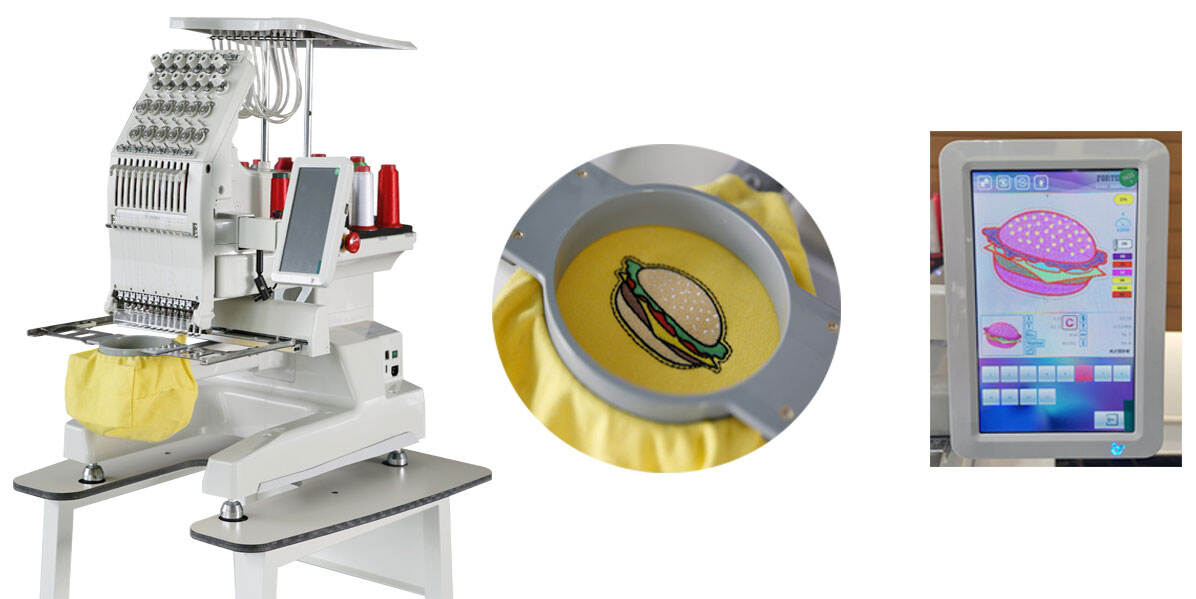
The global textile and fashion industry has witnessed remarkable technological advancements in recent decades, with China emerging as the undisputed leader in manufacturing high-quality embroidery machines. These sophisticated pieces of equipment have revolutionized how businesses approach decorative stitching, offering unprecedented precision, speed, and versatility that has transformed both small-scale operations and large industrial facilities worldwide.
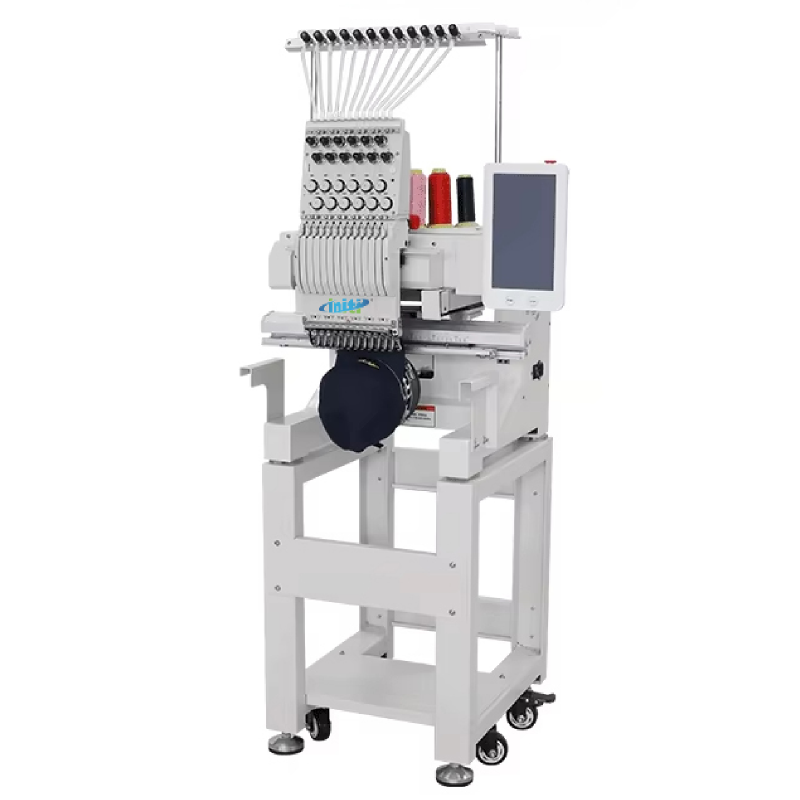
China's dominance in the embroidery machine market stems from a combination of factors including advanced manufacturing capabilities, competitive pricing strategies, and continuous innovation in automation technology. The country's manufacturers have successfully integrated cutting-edge digital control systems with traditional mechanical engineering expertise, creating products that meet the demanding requirements of modern textile production while remaining accessible to businesses of various sizes and budgets.
The evolution of China's embroidery machine industry reflects broader trends in manufacturing excellence and technological advancement. Over the past two decades, Chinese manufacturers have invested heavily in research and development, collaborating with international partners and incorporating feedback from global users to refine their products continuously. This commitment to improvement has resulted in embroidery machines that not only match but often exceed the performance standards set by traditional manufacturing centers in Europe and Japan.
Advanced Technology Integration in Modern Embroidery Systems
Digital Control Systems and Automation Features
Contemporary embroidery machines manufactured in China incorporate sophisticated digital control systems that enable operators to achieve remarkable precision and consistency in their work. These systems feature intuitive touchscreen interfaces that allow users to upload complex designs, adjust stitch parameters, and monitor production progress in real-time. The integration of computer numerical control technology ensures that each stitch is placed with millimeter accuracy, eliminating the variations that once plagued manual embroidery processes.
The automation capabilities of modern Chinese embroidery machines extend far beyond basic stitching functions. Advanced models include automatic thread cutting mechanisms, color change systems that can handle multiple thread types simultaneously, and intelligent tension control that adapts to different fabric weights and textures. These features significantly reduce the skill level required for operation while dramatically increasing production efficiency and output quality.
Machine learning algorithms integrated into the latest embroidery machine models enable predictive maintenance capabilities that minimize downtime and extend equipment lifespan. These systems continuously monitor performance metrics, alerting operators to potential issues before they result in costly breakdowns or quality defects.
Software Innovation and Design Capabilities
The software ecosystem surrounding Chinese embroidery machines has evolved to become increasingly sophisticated, offering users comprehensive design tools and production management capabilities. Professional embroidery software packages now include features such as automatic digitizing, which converts artwork into machine-readable stitch files, and advanced editing tools that allow for precise manipulation of design elements.
Cloud-based design libraries and sharing platforms have transformed how embroidery businesses access and manage their pattern collections. Users can now download thousands of pre-digitized designs, collaborate with remote design teams, and maintain centralized databases of custom patterns that can be accessed from multiple production locations. This connectivity has democratized access to high-quality designs and enabled smaller businesses to compete effectively with larger operations.
Integration with computer-aided design software allows for seamless workflow management from initial concept through final production. Designers can create complex multi-layered embroidery patterns that incorporate various stitch types, fill patterns, and specialty techniques, then transfer these designs directly to production machines without manual intervention or file conversion processes.
Manufacturing Excellence and Quality Control Standards
Precision Engineering and Component Quality
Chinese embroidery machine manufacturers have established rigorous quality control protocols that ensure consistent performance and reliability across their product lines. These protocols encompass every aspect of production, from raw material selection and component manufacturing through final assembly and testing procedures. The result is embroidery machine equipment that meets or exceeds international standards for precision, durability, and operational efficiency.
The mechanical components used in Chinese embroidery machines undergo extensive testing to verify their performance under various operating conditions. Critical elements such as servo motors, drive systems, and needle assemblies are subjected to accelerated wear testing that simulates years of continuous operation. This testing ensures that machines maintain their accuracy and reliability throughout extended production cycles.
Advanced metallurgy and materials science contribute significantly to the superior performance characteristics of Chinese embroidery machines. Manufacturers utilize high-grade steel alloys for structural components, precision-ground surfaces for moving parts, and specialized coatings that resist wear and corrosion. These material innovations contribute to reduced maintenance requirements and extended service life.
International Certification and Compliance
Leading Chinese embroidery machine manufacturers maintain comprehensive certification programs that demonstrate compliance with international safety and performance standards. These certifications include ISO quality management systems, CE marking for European markets, and various national safety approvals that facilitate global distribution and customer confidence.
Environmental compliance has become increasingly important in the embroidery machine industry, with Chinese manufacturers leading the adoption of eco-friendly manufacturing processes and energy-efficient operation. Modern machines incorporate power management systems that reduce electricity consumption during idle periods and utilize recyclable materials in construction wherever possible.
Continuous improvement programs ensure that quality standards evolve alongside technological advancements and changing market requirements. Manufacturers regularly update their testing procedures, incorporate customer feedback into design revisions, and invest in advanced manufacturing equipment that enables tighter tolerances and improved consistency.
Market Advantages and Competitive Positioning
Cost Effectiveness and Value Proposition
The cost advantage offered by Chinese embroidery machine manufacturers extends beyond simple purchase price considerations to encompass total cost of ownership factors such as maintenance requirements, parts availability, and operational efficiency. This comprehensive value proposition has made Chinese machines attractive to businesses ranging from small custom embroidery shops to large-scale industrial operations.
Economies of scale achieved through high-volume production enable Chinese manufacturers to offer advanced features and capabilities at price points that would be impossible for smaller or more specialized producers. This accessibility has democratized advanced embroidery technology, allowing smaller businesses to access professional-grade equipment that was previously available only to large corporations.
The global supply chain infrastructure supporting Chinese embroidery machine production ensures rapid parts availability and technical support services worldwide. This network reduces downtime costs and provides customers with confidence that their investment will be supported throughout the equipment lifecycle.
Innovation and Research Development
Chinese embroidery machine manufacturers invest significantly in research and development activities, often allocating substantial portions of their revenues to advancing technology and improving product performance. These investments have resulted in breakthrough innovations such as high-speed stitching systems, multi-head configurations that dramatically increase production capacity, and intelligent monitoring systems that optimize performance automatically.
Collaboration with academic institutions and research centers has accelerated the pace of innovation in the Chinese embroidery machine industry. University partnerships provide access to cutting-edge research in areas such as materials science, control systems, and automation technology, while industry-academic joint ventures facilitate the rapid commercialization of promising new technologies.
The competitive landscape within China drives continuous improvement and innovation as manufacturers strive to differentiate their products and capture market share. This internal competition benefits global customers by ensuring that new features and capabilities are regularly introduced and that existing products are continuously refined and improved.
Global Market Impact and Industry Transformation
Market Penetration and Adoption Rates
Chinese embroidery machines have achieved significant market penetration across diverse geographic regions and industry sectors. From fashion and apparel manufacturing to promotional products and home textiles, these machines have become essential tools for businesses seeking to add decorative elements to their products efficiently and cost-effectively.
The adoption of Chinese embroidery machine technology has been particularly rapid in developing markets where businesses are establishing new production capabilities or upgrading from manual processes. The combination of advanced features, competitive pricing, and comprehensive support services has made these machines attractive alternatives to more expensive European or Japanese equipment.
Statistical analysis of global trade data reveals the growing dominance of Chinese embroidery machine exports, which now account for a substantial majority of worldwide equipment sales. This market leadership reflects both the superior value proposition offered by Chinese manufacturers and the increasing recognition of their technical capabilities among industrial customers.
Industry Standards and Best Practices
The widespread adoption of Chinese embroidery machines has influenced industry standards and operating procedures across the global textile sector. Manufacturers have adapted their production processes to leverage the advanced capabilities of these machines, resulting in improved efficiency and quality standards throughout the supply chain.
Training programs and certification courses have been developed to help operators maximize the potential of modern embroidery machine technology. These educational initiatives ensure that users can fully utilize advanced features and maintain optimal performance levels, contributing to the overall success of embroidery operations worldwide.
The influence of Chinese embroidery machine design philosophy has extended to other manufacturing sectors, with automation concepts and user interface approaches being adapted for various industrial applications. This cross-pollination of ideas has accelerated technological advancement across multiple industries.
Future Trends and Technological Evolution
Artificial Intelligence and Machine Learning Integration
The next generation of embroidery machines from Chinese manufacturers will incorporate artificial intelligence capabilities that enable autonomous optimization of stitching parameters based on fabric characteristics, design complexity, and quality requirements. These systems will continuously learn from production data to improve performance and reduce waste.
Predictive analytics will become standard features in advanced embroidery machine models, enabling operators to anticipate maintenance needs, optimize production schedules, and minimize downtime through intelligent planning and resource allocation. These capabilities will further enhance the cost-effectiveness and reliability advantages that have made Chinese machines market leaders.
Machine-to-machine communication protocols will enable coordinated operation of multiple embroidery machines within production facilities, optimizing workflow and resource utilization across entire manufacturing operations. This networked approach will unlock new levels of efficiency and flexibility in embroidery production.
Sustainability and Environmental Considerations
Environmental sustainability is becoming increasingly important in embroidery machine design, with manufacturers developing energy-efficient systems that reduce power consumption and minimize waste generation. These initiatives align with global efforts to reduce industrial environmental impact while maintaining production efficiency.
Recyclable materials and modular design approaches will enable easier equipment upgrading and end-of-life processing, reducing the environmental impact of embroidery machine manufacturing and operation. These considerations are becoming important factors in purchase decisions as businesses adopt more comprehensive sustainability policies.
Water-based thread systems and eco-friendly lubricants are being integrated into new embroidery machine designs to reduce environmental impact without compromising performance or reliability. These innovations demonstrate the industry's commitment to sustainable manufacturing practices.
FAQ
What makes Chinese embroidery machines more competitive than alternatives from other countries
Chinese embroidery machines offer superior value through advanced technology integration, competitive pricing, and comprehensive support services. Manufacturers have invested heavily in research and development, resulting in products that match or exceed international quality standards while remaining accessible to businesses of all sizes. The combination of high-volume production capabilities and continuous innovation has enabled Chinese companies to offer features typically found only in much more expensive equipment.
How do modern embroidery machines handle complex multi-color designs
Contemporary embroidery machines feature sophisticated color management systems that can automatically switch between multiple threads during production. Advanced models include thread libraries with hundreds of pre-programmed colors, automatic tension adjustment for different thread types, and intelligent sequencing algorithms that optimize the stitching order to minimize color changes and production time. These capabilities enable the creation of highly detailed, multi-colored designs with minimal operator intervention.
What maintenance requirements should be expected with industrial embroidery machines
Modern embroidery machines are designed for minimal maintenance requirements through the use of high-quality components and intelligent monitoring systems. Regular maintenance typically includes cleaning and lubrication of moving parts, replacement of consumable items such as needles and bobbins, and periodic calibration of control systems. Many machines include predictive maintenance features that alert operators to potential issues before they cause downtime, significantly reducing unexpected repair costs.
How has automation technology improved embroidery machine productivity
Automation has revolutionized embroidery machine productivity through features such as automatic thread cutting, intelligent tension control, and continuous operation capabilities. Modern machines can run unattended for extended periods, automatically handling thread changes, detecting and correcting minor issues, and maintaining consistent quality throughout production runs. These improvements have increased typical production speeds by 300-500% compared to manual embroidery processes while simultaneously improving quality consistency.
Table of Contents
- Advanced Technology Integration in Modern Embroidery Systems
- Manufacturing Excellence and Quality Control Standards
- Market Advantages and Competitive Positioning
- Global Market Impact and Industry Transformation
- Future Trends and Technological Evolution
-
FAQ
- What makes Chinese embroidery machines more competitive than alternatives from other countries
- How do modern embroidery machines handle complex multi-color designs
- What maintenance requirements should be expected with industrial embroidery machines
- How has automation technology improved embroidery machine productivity