

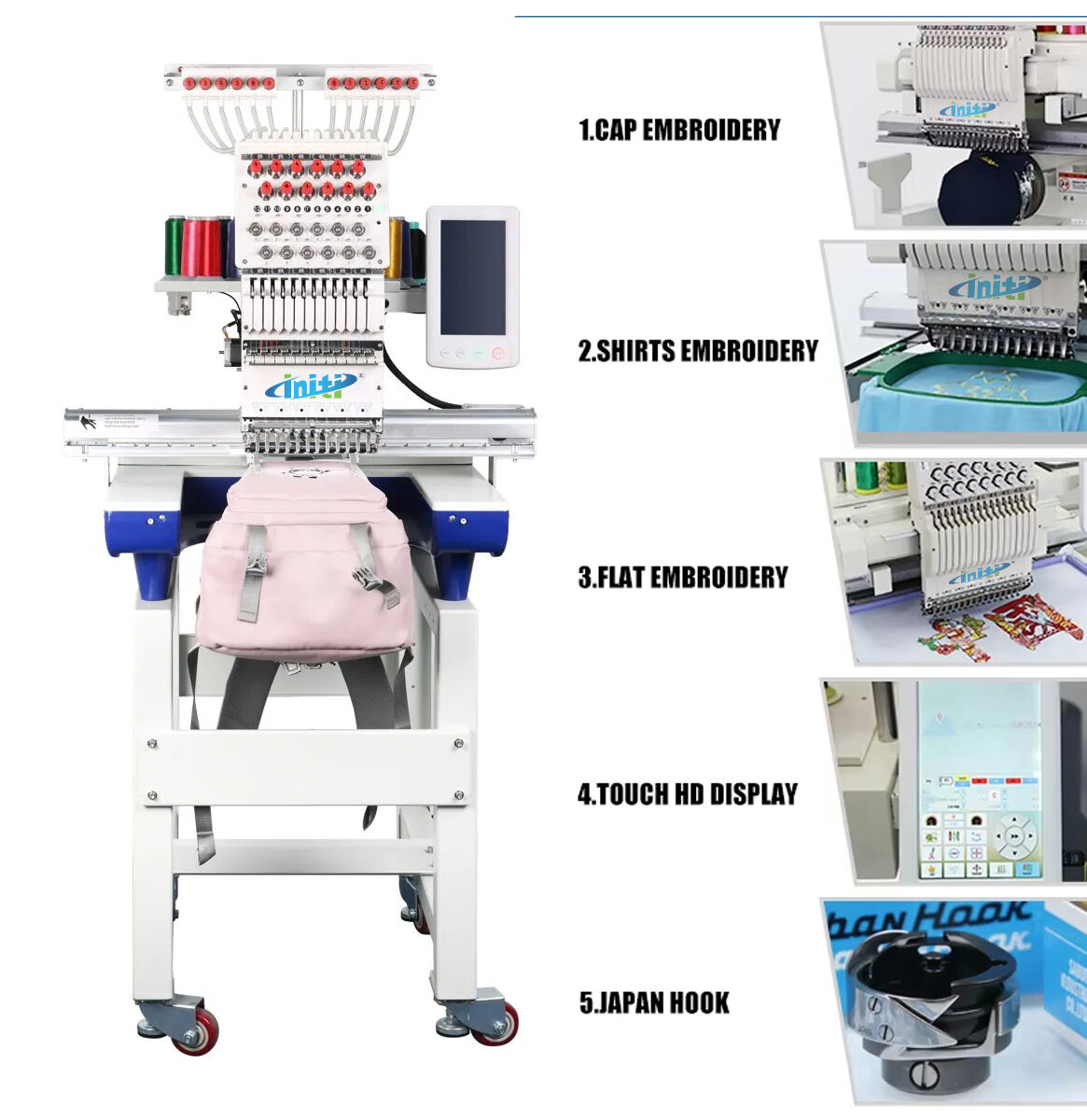
Understanding embroidery machine price dynamics is crucial for businesses seeking to maximize their investment returns in textile manufacturing. The modern industrial landscape demands careful consideration of both upfront costs and long-term profitability when selecting embroidery equipment. Smart purchasing decisions require a comprehensive analysis that goes beyond initial embroidery machine price comparisons to include operational efficiency, maintenance requirements, and production capacity metrics.
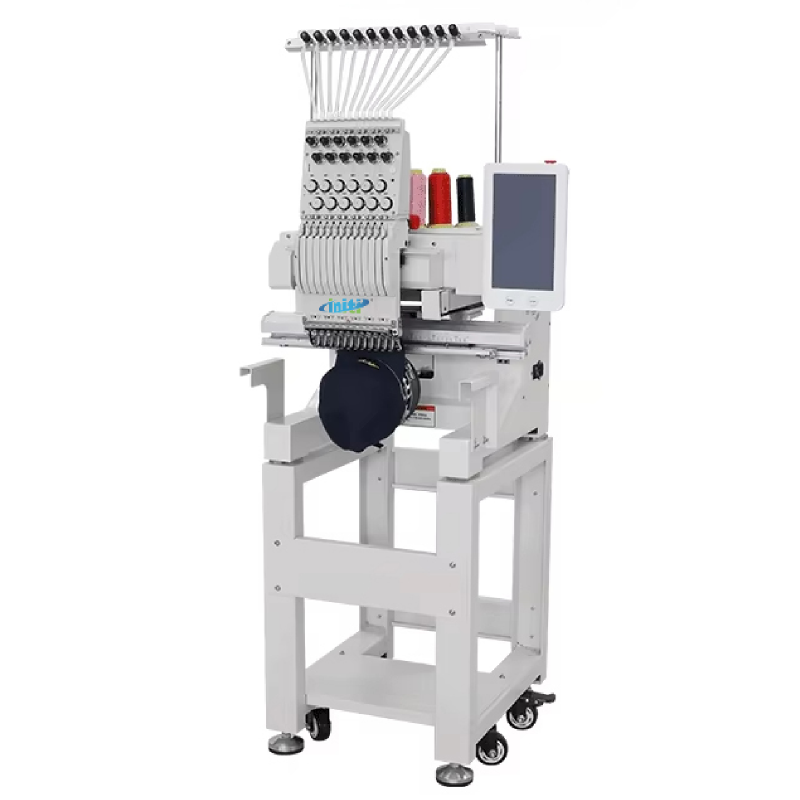
Understanding Initial Investment Considerations
Capital Equipment Assessment Framework
The foundation of any successful embroidery business investment begins with establishing clear parameters for equipment evaluation. When analyzing embroidery machine price options, manufacturers must consider their current production requirements alongside anticipated growth projections. Single-head machines typically offer lower entry points, making them attractive for startups and small operations, while multi-head systems command higher prices but deliver proportionally greater output capabilities.
Budget allocation strategies should encompass not only the primary equipment cost but also ancillary expenses including installation, training, and initial supply inventories. Professional buyers recognize that the lowest embroidery machine price rarely translates to the most cost-effective long-term solution. Market research indicates that businesses focusing solely on upfront costs often experience higher total ownership expenses due to increased maintenance requirements, slower production speeds, and limited feature sets.
Quality Versus Cost Analysis
Premium embroidery equipment manufacturers typically incorporate advanced components that justify higher price points through enhanced reliability and performance metrics. These systems often feature precision servo motors, reinforced frame construction, and sophisticated software packages that streamline workflow processes. While the initial embroidery machine price may exceed budget-conscious alternatives, the improved operational efficiency and reduced downtime frequently result in superior return on investment calculations.
Manufacturing quality standards directly impact both immediate performance and long-term durability expectations. Chinese-manufactured embroidery machines have gained significant market acceptance by combining competitive pricing with improved build quality and comprehensive warranty programs. Modern production facilities utilize automated assembly processes and rigorous quality control protocols that ensure consistent performance standards across product lines.
Return on Investment Calculation Methods
Production Capacity Metrics
Accurate ROI calculations must incorporate realistic production capacity assessments based on specific operational requirements. Single-head embroidery machines typically operate at speeds ranging from 800 to 1200 stitches per minute, with actual throughput depending on design complexity and thread change frequency. When evaluating embroidery machine price options, businesses should calculate potential revenue generation based on local market rates and expected utilization levels.
Capacity planning involves analyzing order patterns, seasonal fluctuations, and growth projections to determine optimal equipment sizing. Underestimating production needs often leads to bottlenecks and lost revenue opportunities, while overinvestment in capacity can strain cash flow and reduce profitability. Professional consultants recommend targeting 70-80% capacity utilization to maintain operational flexibility while maximizing equipment investment returns.
Operating Cost Considerations
Comprehensive financial modeling requires detailed analysis of ongoing operational expenses including electricity consumption, maintenance requirements, and consumable supply costs. Modern embroidery machines incorporate energy-efficient components that reduce utility expenses while maintaining high performance standards. The embroidery machine price evaluation should include projected annual operating costs to provide accurate total cost of ownership projections.
Thread consumption rates vary significantly based on design complexity and stitch density requirements. Professional-grade machines often incorporate thread tension monitoring systems that minimize waste while ensuring consistent stitch quality. Maintenance scheduling and spare parts availability directly impact operational continuity and should be factored into long-term cost projections when comparing different embroidery machine price points.
Market Positioning and Competitive Advantages
Technology Integration Benefits
Advanced embroidery systems provide significant competitive advantages through integrated design software, automated color matching, and real-time production monitoring capabilities. These technological enhancements justify premium embroidery machine price points by reducing labor requirements and improving output quality consistency. Modern systems often include USB connectivity, network integration, and cloud-based design libraries that streamline workflow processes.
Automated features such as thread trimming, color change sequencing, and tension adjustment reduce operator skill requirements while maintaining professional-quality results. Training costs and production learning curves are minimized through intuitive interface designs and comprehensive documentation packages. Businesses investing in technologically advanced equipment often experience faster market penetration and higher customer satisfaction levels.
Scalability and Future Growth
Strategic equipment selection requires careful consideration of expansion possibilities and market development opportunities. Modular embroidery systems allow businesses to add capacity incrementally as demand grows, providing flexibility while managing cash flow requirements. Initial embroidery machine price comparisons should include evaluation of upgrade pathways and compatibility with existing production infrastructure.
Market trends indicate increasing demand for customized and small-batch production runs, making versatile single-head systems particularly attractive for service-oriented businesses. Equipment that accommodates diverse material types and design complexities commands premium pricing but enables broader market participation and revenue diversification opportunities.
Financial Planning Strategies
Financing Options and Cash Flow Management
Equipment financing alternatives can significantly impact the effective embroidery machine price and overall project feasibility. Lease agreements, equipment loans, and manufacturer financing programs provide flexibility for businesses with limited capital availability. Monthly payment structures should align with projected revenue generation to ensure sustainable cash flow throughout the financing term.
Tax incentives and depreciation benefits often reduce the net cost of equipment investments, particularly for businesses qualifying for manufacturing tax credits or accelerated depreciation schedules. Professional financial advisors can help optimize the timing and structure of equipment purchases to maximize available benefits and minimize tax liability.
Risk Mitigation and Insurance Considerations
Comprehensive insurance coverage protects against equipment damage, theft, and business interruption scenarios that could impact investment returns. Premium calculations should be included in total cost projections when comparing embroidery machine price options. Extended warranty programs and service contracts provide additional protection against unexpected repair expenses and production downtime.
Backup equipment strategies and maintenance scheduling help ensure operational continuity during peak demand periods. Businesses operating single-machine configurations face higher risk exposure compared to multi-machine installations that provide redundancy and flexibility. Risk assessment should factor into equipment selection decisions and operational planning processes.
Market Research and Vendor Selection
Supplier Evaluation Criteria
Thorough vendor assessment involves analyzing manufacturing capabilities, quality control processes, and customer support infrastructure. Reputable embroidery machine manufacturers provide comprehensive documentation, training resources, and responsive technical support services that justify premium pricing structures. References from existing customers and industry testimonials offer valuable insights into long-term satisfaction and performance expectations.
International suppliers often provide competitive embroidery machine price options while maintaining quality standards through modern manufacturing processes and global distribution networks. Import considerations including shipping costs, customs duties, and warranty service availability should be factored into total cost calculations when evaluating overseas suppliers.
Performance Testing and Validation
Demonstration programs and trial periods allow businesses to validate equipment performance under actual operating conditions before finalizing purchase decisions. Production speed, stitch quality, and reliability metrics can be assessed using representative design samples and material types. These evaluation opportunities help ensure compatibility with specific application requirements and performance expectations.
Comparative testing across multiple embroidery machine price points provides valuable data for investment decision-making. Standardized test protocols should include speed measurements, quality assessments, and operational complexity evaluations to generate objective performance comparisons. Documentation of test results supports financial justification and helps establish realistic performance expectations.
FAQ
What factors most significantly impact embroidery machine pricing?
Embroidery machine price variations primarily result from differences in construction quality, feature sets, production capacity, and brand reputation. Single-head machines typically range from budget-friendly options under five thousand dollars to premium systems exceeding twenty thousand dollars. Key cost drivers include frame materials, motor specifications, software capabilities, and included accessories.
How do I calculate the return on investment for embroidery equipment?
ROI calculations should incorporate initial embroidery machine price, financing costs, operating expenses, and projected revenue generation based on local market rates and expected utilization levels. Factor in thread costs, electricity consumption, maintenance expenses, and labor requirements to determine accurate profitability projections. Most businesses target payback periods between twelve to thirty-six months depending on market conditions and operational efficiency.
Are Chinese-manufactured embroidery machines reliable for commercial use?
Modern Chinese embroidery manufacturers have significantly improved quality standards through advanced production techniques and comprehensive quality control systems. Many offer competitive warranties, responsive customer support, and extensive parts availability that support commercial operations. The embroidery machine price advantage often makes these systems attractive for businesses seeking cost-effective solutions without compromising performance requirements.
What ongoing costs should I budget for embroidery machine operation?
Operating expenses typically include thread and stabilizer materials, electricity consumption, routine maintenance, and periodic service requirements. Thread costs vary based on design complexity but generally range from two to five dollars per thousand stitches. Annual maintenance expenses usually represent five to ten percent of the original embroidery machine price, while electricity costs depend on local utility rates and machine utilization levels.