

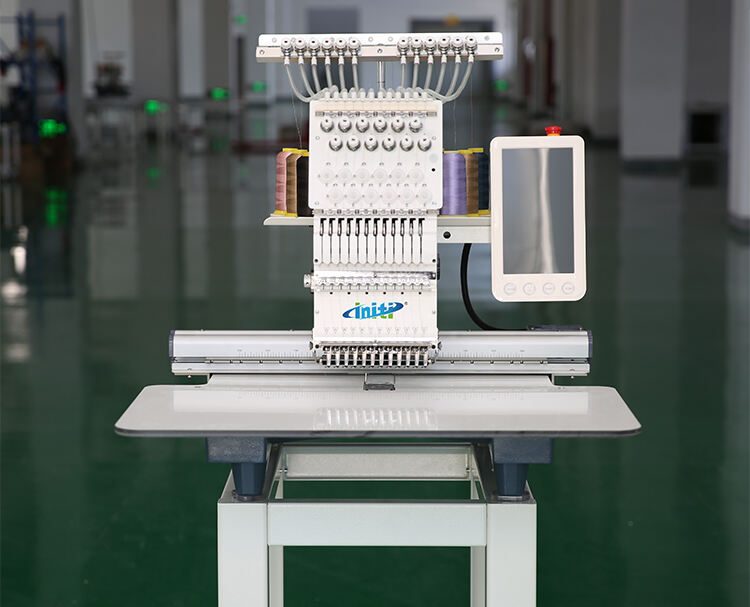
The textile industry has witnessed unprecedented growth in recent years, with businesses across various sectors seeking efficient solutions to meet increasing demand for custom embroidered products. For entrepreneurs and established companies looking to expand their operations, investing in wholesale embroidery equipment represents a strategic pathway to enhanced productivity, improved profit margins, and sustained business growth. Understanding the complexities of commercial embroidery operations and selecting the right equipment can transform a small-scale operation into a thriving enterprise capable of handling large-volume orders while maintaining exceptional quality standards.
Understanding Commercial Embroidery Market Dynamics
Market Growth Trends and Opportunities
The global embroidery market continues experiencing robust expansion, driven by increasing demand from fashion, automotive, healthcare, and promotional product industries. Market research indicates consistent year-over-year growth, with commercial embroidery services commanding premium pricing for customized applications. Businesses utilizing wholesale embroidery equipment position themselves advantageously to capitalize on this expanding market, offering clients comprehensive solutions spanning corporate branding, fashion customization, and specialized industrial applications.
Contemporary market dynamics favor operations capable of delivering rapid turnaround times without compromising quality standards. Companies investing in advanced wholesale embroidery equipment demonstrate enhanced competitive positioning, enabling them to secure larger contracts and establish long-term partnerships with corporate clients requiring consistent, high-volume production capabilities.
Customer Demand Patterns and Service Requirements
Modern customers expect sophisticated embroidery services encompassing complex designs, multiple thread colors, and diverse fabric compatibility. Analyzing customer demand patterns reveals increasing preferences for intricate logowork, detailed artistic reproductions, and specialized techniques requiring advanced equipment capabilities. Wholesale embroidery equipment investments must align with these evolving customer expectations to ensure sustainable business growth.
Service requirements extend beyond basic embroidery functions, encompassing rapid design modifications, color matching accuracy, and consistent stitch quality across large production runs. Businesses equipped with professional-grade wholesale embroidery equipment demonstrate superior capacity to meet demanding customer specifications while maintaining operational efficiency throughout extended production cycles.
Essential Features of Professional Embroidery Systems
Multi-Head Configuration Advantages
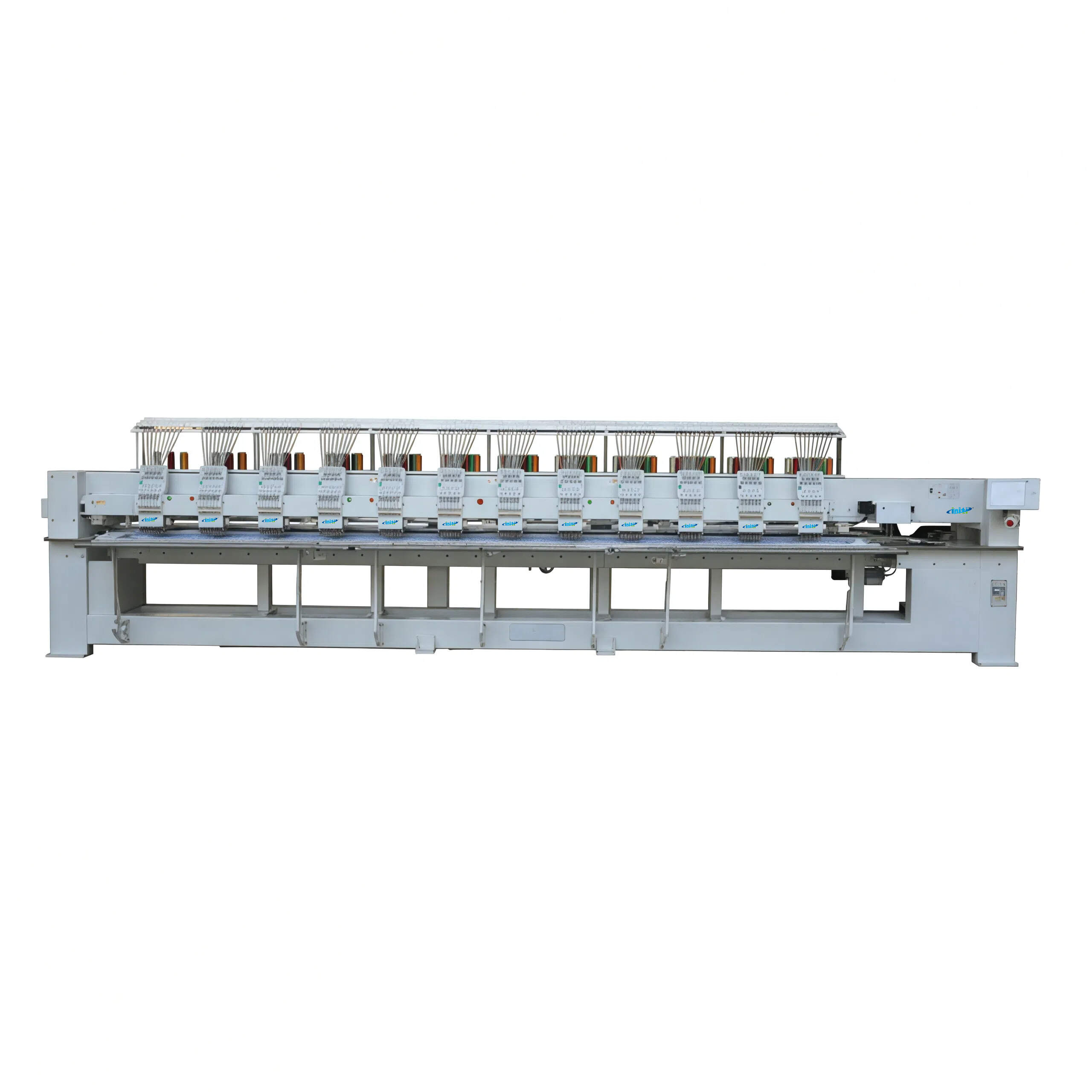
Professional wholesale embroidery equipment typically features multi-head configurations enabling simultaneous processing of multiple garments or design elements. These systems dramatically reduce production timeframes while ensuring consistent quality across all embroidered items. Multi-head functionality proves particularly valuable for large orders requiring identical designs, allowing businesses to complete substantial contracts within compressed delivery schedules.
Advanced multi-head systems incorporate independent thread tension controls, individual hoop positioning mechanisms, and synchronized operation protocols ensuring uniform results across all embroidery heads. This sophisticated engineering enables operators to maintain precise control over complex designs while maximizing throughput efficiency through parallel processing capabilities inherent in quality wholesale embroidery equipment.
Speed and Precision Engineering
High-speed operation capabilities distinguish professional wholesale embroidery equipment from entry-level alternatives, with commercial systems typically achieving speeds exceeding standard consumer models by significant margins. These enhanced speeds translate directly into improved productivity metrics, enabling businesses to fulfill larger orders within standard timeframes while maintaining competitive pricing structures.
Precision engineering ensures consistent stitch quality regardless of operational speeds, incorporating advanced servo motor technology, computerized tension monitoring, and real-time quality control systems. This combination of speed and precision establishes the foundation for successful commercial embroidery operations utilizing professional-grade wholesale embroidery equipment designed for demanding production environments.
Selecting Optimal Equipment for Business Scaling
Production Volume Assessment
Determining appropriate wholesale embroidery equipment specifications requires comprehensive analysis of current production volumes and projected growth trajectories. Businesses must evaluate existing capacity limitations, peak demand periods, and anticipated expansion requirements to select systems capable of supporting long-term operational objectives without requiring frequent equipment upgrades.
Production volume assessments should incorporate seasonal fluctuations, special event requirements, and potential new market opportunities that may influence equipment utilization patterns. Investing in wholesale embroidery equipment with scalable capabilities ensures businesses can adapt to changing market conditions while maximizing return on investment through flexible production scheduling.
Technical Specifications and Compatibility
Technical specifications encompass embroidery area dimensions, thread capacity, design memory capabilities, and software compatibility requirements essential for seamless integration with existing operational workflows. Professional wholesale embroidery equipment must support industry-standard file formats while offering advanced editing capabilities for design customization and optimization.
Compatibility considerations extend to thread suppliers, fabric types, and accessory components ensuring operational flexibility across diverse project requirements. Selecting wholesale embroidery equipment with comprehensive compatibility features minimizes supply chain constraints while enabling businesses to explore new market opportunities requiring specialized materials or techniques.
Operational Efficiency and Workflow Optimization
Setup and Programming Procedures
Efficient setup procedures significantly impact overall productivity metrics, with modern wholesale embroidery equipment incorporating automated threading systems, quick-change hoop mechanisms, and intuitive programming interfaces reducing changeover times between different projects. These efficiency enhancements enable businesses to process diverse orders throughout single production shifts while minimizing downtime associated with manual adjustments.
Programming procedures benefit from user-friendly software interfaces providing comprehensive design editing capabilities, automatic color sequencing, and optimized stitch path generation. Advanced wholesale embroidery equipment systems integrate these features seamlessly, enabling operators to focus on quality control and customer service rather than complex technical programming requirements.
Quality Control and Consistency Measures
Maintaining consistent quality standards across large production runs requires sophisticated monitoring systems incorporated into professional wholesale embroidery equipment. These systems track thread tension, stitch density, and design alignment throughout production cycles, automatically alerting operators to potential quality issues before they affect finished products.
Quality control measures encompass pre-production testing procedures, in-process monitoring protocols, and post-production inspection standards ensuring all embroidered items meet customer specifications. Implementing comprehensive quality management systems supported by advanced wholesale embroidery equipment establishes reputation for excellence essential for business growth and customer retention.
Financial Considerations and Return on Investment
Initial Investment Analysis
Evaluating initial investment requirements for wholesale embroidery equipment involves comprehensive cost analysis encompassing equipment purchase prices, installation expenses, training requirements, and auxiliary supplies necessary for operational startup. Financial planning must account for these various cost components while establishing realistic timelines for achieving profitability through increased production capacity.
Investment analysis should incorporate financing options, tax incentives, and depreciation schedules affecting overall project economics. Many businesses successfully leverage equipment financing programs specifically designed for wholesale embroidery equipment purchases, enabling them to preserve working capital while acquiring advanced production capabilities essential for competitive market positioning.
Revenue Generation Potential
Revenue generation potential increases substantially with professional wholesale embroidery equipment capable of handling diverse project types and volume requirements. Businesses can command premium pricing for complex designs, rapid turnaround services, and specialized applications unavailable through basic embroidery operations, significantly improving profit margins compared to entry-level equipment alternatives.
Long-term revenue projections benefit from equipment durability, reliability, and technological advancement ensuring continued competitiveness throughout extended operational periods. Quality wholesale embroidery equipment investments typically demonstrate positive returns within reasonable timeframes while providing platform for sustained business growth and market expansion opportunities.
Maintenance and Long-Term Performance
Preventive Maintenance Protocols
Implementing comprehensive preventive maintenance protocols ensures optimal performance from wholesale embroidery equipment while minimizing unexpected downtime that could disrupt production schedules and customer commitments. Regular maintenance procedures encompass lubrication schedules, component inspections, and calibration verifications maintaining equipment accuracy and reliability throughout extended operational periods.
Maintenance protocols should align with manufacturer recommendations while incorporating operational environment considerations such as dust exposure, temperature variations, and usage intensity patterns. Properly maintained wholesale embroidery equipment demonstrates extended service life and consistent performance characteristics essential for maintaining customer satisfaction and operational profitability.
Technical Support and Training Requirements
Access to comprehensive technical support services significantly impacts successful wholesale embroidery equipment implementation, encompassing installation assistance, operator training programs, and ongoing troubleshooting support ensuring smooth operational transitions and minimizing learning curve challenges for personnel.
Training requirements vary depending on equipment complexity and operator experience levels, with quality manufacturers providing structured educational programs covering operational procedures, maintenance protocols, and advanced feature utilization. Investing in comprehensive training ensures businesses maximize their wholesale embroidery equipment capabilities while maintaining safe, efficient operational practices.
FAQ
What production volume justifies investing in wholesale embroidery equipment
Businesses processing more than 200 garments weekly or handling orders exceeding 50 pieces typically benefit from wholesale embroidery equipment investments. The enhanced speed, consistency, and quality capabilities of professional systems enable cost-effective production at these volumes while supporting business growth through improved capacity and reduced per-unit costs.
How long does wholesale embroidery equipment typically last with proper maintenance
Quality wholesale embroidery equipment properly maintained can provide reliable service for 10-15 years or more, depending on usage intensity and operational conditions. Regular maintenance, appropriate operating procedures, and timely component replacements significantly extend equipment lifespan while maintaining performance standards essential for commercial production requirements.
What factors most influence wholesale embroidery equipment selection decisions
Key selection factors include production volume requirements, design complexity capabilities, available workspace dimensions, budget constraints, and technical support availability. Businesses should prioritize equipment offering scalable capacity, proven reliability, comprehensive warranty coverage, and manufacturer support services ensuring long-term operational success and investment protection.
Can wholesale embroidery equipment handle diverse fabric types and thicknesses
Modern wholesale embroidery equipment accommodates extensive fabric variety including lightweight materials, heavy canvas, leather, and synthetic composites through adjustable tension systems, multiple hoop options, and specialized presser foot configurations. This versatility enables businesses to serve diverse market segments while expanding service offerings beyond traditional embroidery applications.