

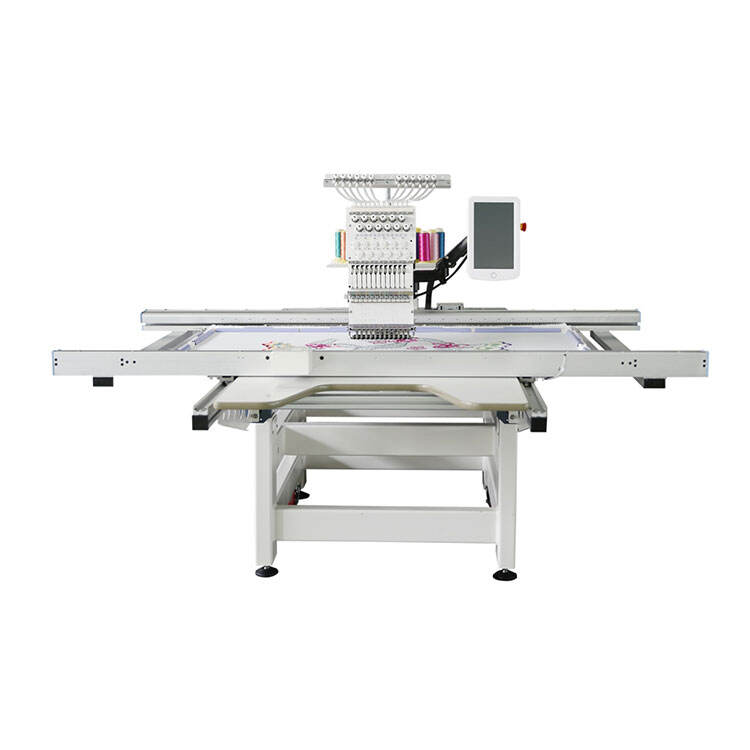
Modern textile manufacturing demands exceptional precision and reliability from industrial equipment. Professional embroidery machines have evolved into sophisticated systems that combine cutting-edge technology with robust construction to deliver consistent, high-quality results. Understanding the fundamental characteristics that define superior embroidery machines enables manufacturers to make informed investment decisions that impact their production capabilities for years to come.
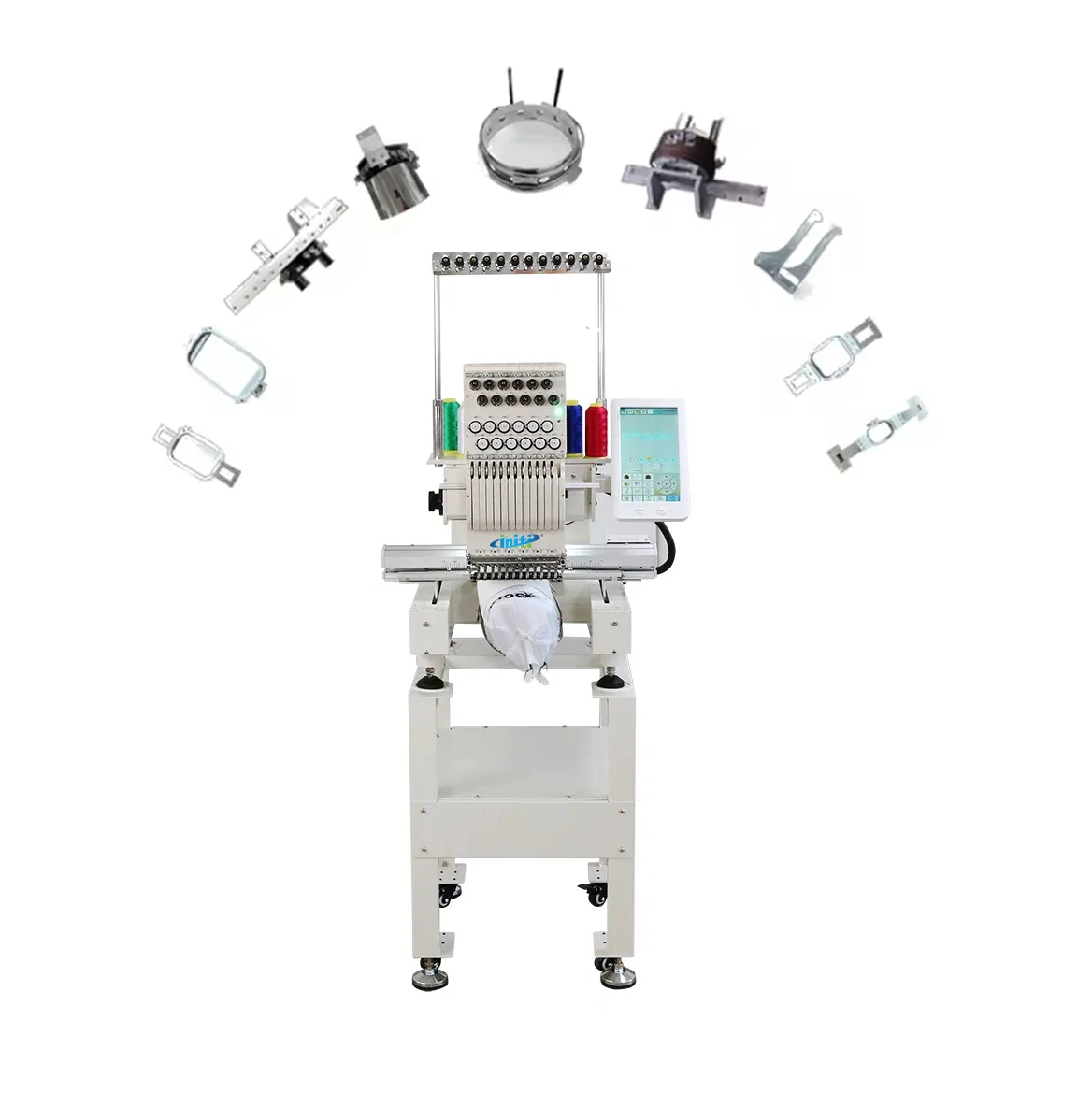
The textile industry's increasing demand for customization and rapid turnaround times places tremendous pressure on production equipment. Quality embroidery machines must maintain precision across millions of stitches while operating continuously in demanding industrial environments. This comprehensive analysis explores the critical factors that separate exceptional embroidery equipment from standard alternatives, providing insights into durability standards, precision mechanisms, and performance indicators that define market-leading solutions.
Engineering Excellence in Machine Construction
Frame Design and Structural Integrity
The foundation of any reliable embroidery system begins with its structural framework. Premium embroidery machines incorporate heavy-duty steel frames engineered to minimize vibration and maintain dimensional stability during high-speed operation. These robust constructions resist deflection under operational loads, ensuring consistent stitch placement even during extended production runs. Advanced frame designs utilize computer-aided engineering to optimize material distribution, creating structures that balance strength with accessibility for maintenance operations.
Manufacturing tolerances in frame construction directly impact long-term performance reliability. Precision-machined mounting surfaces ensure proper component alignment throughout the machine's operational life. Quality manufacturers employ stress-relief processes and controlled cooling techniques during frame fabrication to eliminate internal tensions that could cause dimensional changes over time. This attention to structural detail translates into reduced maintenance requirements and extended equipment lifecycles.
Component Selection and Material Quality
Superior embroidery machines utilize premium-grade components specifically selected for their durability and performance characteristics. High-precision bearings, manufactured to aerospace standards, provide smooth operation and extended service life under continuous operation. Drive systems incorporate hardened steel gears and precision-ground surfaces that maintain accuracy over millions of operational cycles. These material choices reflect the manufacturer's commitment to long-term reliability rather than initial cost optimization.
Critical wear components receive special attention in quality designs. Needle bars utilize specialized alloys that resist wear while maintaining precise tolerances. Thread guides incorporate ceramic or specialized polymer materials that minimize friction and prevent thread damage during high-speed operation. Even seemingly minor components like tension assemblies and thread cutters are engineered using premium materials to ensure consistent performance throughout the machine's operational life.
Precision Control Systems and Technology Integration
Advanced Motion Control Architecture
Modern embroidery machines employ sophisticated motion control systems that coordinate multiple axes with microscopic precision. These systems utilize high-resolution servo motors coupled with precision feedback devices to maintain exact positioning throughout complex embroidery patterns. Advanced interpolation algorithms ensure smooth motion transitions, eliminating the jerky movements that can cause stitch irregularities or thread breaks.
The integration of real-time control systems allows for dynamic adjustment of operational parameters based on fabric characteristics and pattern requirements. Intelligent algorithms monitor thread tension, needle position, and fabric movement to optimize stitch quality automatically. These control systems can detect and compensate for minor variations in material properties, ensuring consistent results across different fabric types and embroidery applications.
Digital Processing and Pattern Management
Contemporary embroidery machines incorporate powerful digital processing capabilities that handle complex pattern data with remarkable efficiency. High-speed processors manage intricate designs containing hundreds of thousands of stitches while maintaining precise timing coordination between all machine functions. Advanced memory systems provide rapid access to pattern libraries and support real-time modifications without interrupting production workflows.
Pattern optimization algorithms analyze design data to determine optimal stitch sequences and machine movements. These systems can automatically adjust parameters such as stitch density, underlay patterns, and color changes to maximize efficiency while maintaining design integrity. The ability to process and optimize patterns in real-time significantly reduces setup times and improves overall production throughput.
Durability Standards and Operational Reliability
Industrial-Grade Component Specifications
Professional embroidery machines must meet rigorous durability standards that far exceed those required for consumer equipment. Industrial specifications typically require components to withstand millions of operational cycles while maintaining original performance parameters. Critical assemblies undergo extensive fatigue testing to validate their ability to perform reliably under continuous operation conditions typical of commercial production environments.
Lubrication systems in quality embroidery machines utilize advanced synthetic lubricants and automated distribution systems to ensure proper maintenance of all moving components. These systems monitor lubricant levels and quality, providing alerts when service is required. Sealed bearing assemblies and precision-machined clearances minimize contamination while maximizing component life. Such attention to lubrication details significantly extends service intervals and reduces unexpected downtime.
Environmental Resistance and Protection
Manufacturing environments often expose embroidery machines to challenging conditions including temperature variations, humidity changes, and airborne contaminants. Quality designs incorporate environmental protection features that maintain performance reliability under these conditions. Sealed electrical enclosures protect sensitive control electronics from dust and moisture, while temperature compensation systems maintain accuracy across varying operational conditions.
Vibration isolation systems prevent external disturbances from affecting stitch quality, while electromagnetic shielding protects digital systems from interference. These protective measures ensure that embroidery machines maintain their precision and reliability regardless of the industrial environment in which they operate. Such comprehensive environmental protection extends equipment life and maintains consistent output quality.
Performance Metrics and Quality Indicators
Stitch Accuracy and Consistency Measurements
Quantitative assessment of embroidery machine performance relies on precise measurement of stitch placement accuracy and consistency. Industry-standard testing procedures evaluate positioning repeatability across the entire embroidery field, typically requiring accuracy within fractions of a millimeter. Quality embroidery machines consistently achieve positioning accuracies that exceed industry standards, even after extended operation periods.
Stitch formation quality encompasses multiple parameters including thread tension consistency, penetration depth uniformity, and loop formation precision. Advanced embroidery machines incorporate monitoring systems that continuously evaluate these parameters, providing real-time feedback on stitch quality. This capability enables immediate correction of minor variations before they affect the finished product, ensuring consistent quality throughout production runs.
Production Speed and Efficiency Optimization
Modern embroidery machines achieve remarkable production speeds while maintaining exceptional quality standards. High-performance systems can execute complex patterns at speeds exceeding 1,000 stitches per minute without compromising accuracy or thread handling reliability. These speed capabilities result from careful optimization of mechanical systems, motion control algorithms, and thread handling mechanisms.
Efficiency optimization extends beyond raw speed to encompass factors such as thread change times, pattern setup procedures, and maintenance requirements. Advanced embroidery machines incorporate features that minimize non-productive time, including rapid color changes, automatic thread trimming, and simplified pattern loading procedures. These efficiency improvements can significantly impact overall production capacity and operational costs.
Maintenance Requirements and Service Support
Preventive Maintenance Protocols
Reliable embroidery machines incorporate design features that simplify maintenance procedures while minimizing service requirements. Accessible lubrication points, easily replaceable wear components, and clear maintenance indicators enable efficient servicing that keeps machines operating at peak performance. Quality manufacturers provide comprehensive maintenance documentation and training programs that help operators maximize equipment reliability.
Predictive maintenance capabilities in advanced embroidery machines monitor component condition and operational parameters to predict service requirements before problems occur. These systems track parameters such as bearing temperatures, vibration levels, and electrical current consumption to identify developing issues. Early detection of potential problems allows for planned maintenance that minimizes production disruption and prevents catastrophic failures.
Technical Support and Parts Availability
Long-term operational success with embroidery machines depends heavily on the availability of technical support and replacement parts. Established manufacturers maintain extensive parts inventories and provide rapid shipping to minimize downtime when service is required. Technical support teams with deep product knowledge can diagnose problems quickly and provide effective solutions, often through remote assistance capabilities.
Training programs offered by quality manufacturers ensure that operators and maintenance personnel understand proper operational procedures and basic troubleshooting techniques. This knowledge transfer reduces the likelihood of operator-induced problems while enabling quick resolution of minor issues. Comprehensive training significantly improves overall equipment effectiveness and extends operational life.
Technology Integration and Future-Proofing
Connectivity and Industry 4.0 Compatibility
Contemporary embroidery machines increasingly incorporate connectivity features that enable integration with broader manufacturing systems. Network interfaces allow real-time monitoring of production status, quality metrics, and maintenance requirements from central management systems. This connectivity enables optimization of production schedules and resource allocation across multiple embroidery machines.
Data collection capabilities in modern embroidery machines provide valuable insights into production efficiency and quality trends. Advanced analytics can identify patterns in operational data that suggest opportunities for process improvements or predict maintenance requirements. This data-driven approach to production management represents a significant advancement in manufacturing efficiency.
Software Capabilities and Upgrade Potential
Software sophistication in embroidery machines continues to advance rapidly, with new capabilities regularly introduced through firmware updates. Quality systems incorporate expandable software architectures that support future enhancements without requiring hardware modifications. This upgrade capability protects investment value by extending equipment capability over time.
Advanced software features include automatic digitizing capabilities, real-time design modification tools, and intelligent production optimization algorithms. These capabilities reduce the skill requirements for operators while improving overall production quality and efficiency. Software-based improvements often provide the most cost-effective method for enhancing embroidery machine capabilities.
Market Considerations and Investment Evaluation
Total Cost of Ownership Analysis
Evaluating embroidery machines requires consideration of total ownership costs rather than initial purchase price alone. Quality machines with higher initial costs often provide lower operating costs through reduced maintenance requirements, higher reliability, and improved efficiency. Comprehensive cost analysis should include factors such as energy consumption, maintenance costs, operator training requirements, and expected equipment life.
Production capacity and quality consistency directly impact revenue generation potential. Embroidery machines that maintain consistent quality and high uptime percentages generate more revenue per unit time than less reliable alternatives. This revenue difference can quickly offset higher initial investment costs, making quality equipment more economical over the equipment lifecycle.
Technology Evolution and Market Trends
The embroidery machine market continues to evolve rapidly, with new technologies regularly introduced to improve performance and capabilities. Laser cutting integration, automated thread handling systems, and artificial intelligence applications represent current development trends. Understanding these trends helps in selecting embroidery machines that will remain competitive throughout their operational life.
Market demand increasingly favors customization capabilities and rapid turnaround times. Embroidery machines that support these requirements through flexible programming, quick setup procedures, and multi-format compatibility position manufacturers advantageously in competitive markets. Investment in advanced embroidery technology often provides strategic advantages that extend well beyond immediate production requirements.
FAQ
What factors most significantly impact embroidery machine longevity
Structural frame quality, component grade selection, and maintenance program effectiveness represent the most critical factors affecting embroidery machine longevity. Machines with heavy-duty steel frames, premium bearing systems, and comprehensive lubrication systems typically operate reliably for decades with proper maintenance. Regular preventive maintenance following manufacturer specifications can extend equipment life significantly beyond standard expectations.
How do precision requirements differ between industrial and commercial embroidery applications
Industrial embroidery applications typically require positioning accuracy within 0.1mm or better, while commercial applications may accept tolerances up to 0.3mm. Industrial machines also must maintain these precision levels through millions of operational cycles, requiring superior mechanical construction and control systems. The continuous operation requirements in industrial settings demand enhanced cooling systems and more robust component specifications.
What maintenance indicators suggest embroidery machine performance degradation
Key performance degradation indicators include increasing thread break frequency, positioning accuracy drift, unusual noise or vibration levels, and extending cycle times. Temperature increases in bearing assemblies, irregular stitch formation, and control system error messages also suggest developing problems. Monitoring these parameters enables predictive maintenance that prevents major failures and maintains production quality.
How does software sophistication affect embroidery machine productivity
Advanced software significantly improves productivity through features such as automatic pattern optimization, intelligent color sequencing, and real-time quality monitoring. Modern embroidery machines with sophisticated software can reduce setup times by 50% or more while improving stitch quality consistency. Software capabilities for remote monitoring and predictive maintenance also minimize unexpected downtime and optimize maintenance scheduling.
Table of Contents
- Engineering Excellence in Machine Construction
- Precision Control Systems and Technology Integration
- Durability Standards and Operational Reliability
- Performance Metrics and Quality Indicators
- Maintenance Requirements and Service Support
- Technology Integration and Future-Proofing
- Market Considerations and Investment Evaluation
-
FAQ
- What factors most significantly impact embroidery machine longevity
- How do precision requirements differ between industrial and commercial embroidery applications
- What maintenance indicators suggest embroidery machine performance degradation
- How does software sophistication affect embroidery machine productivity