

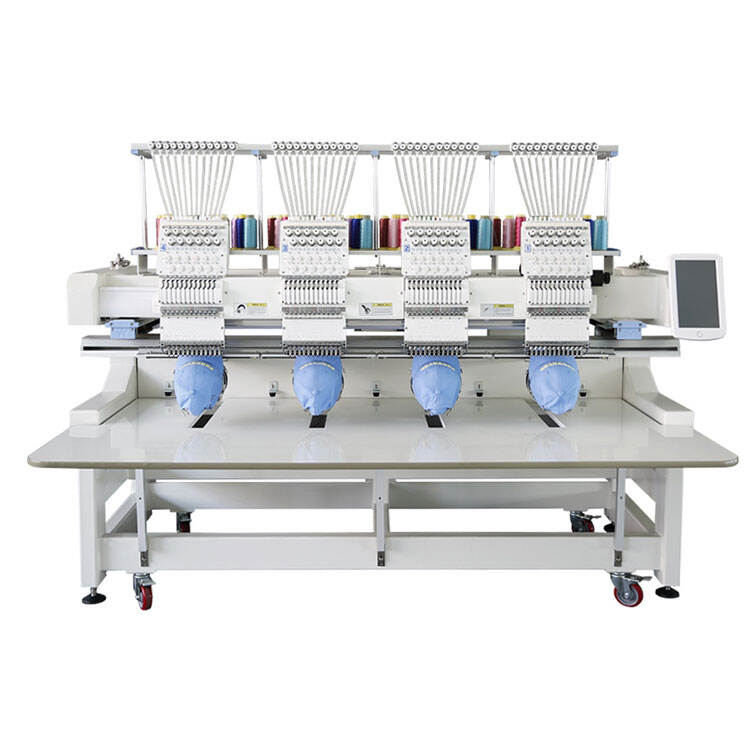
Manufacturing efficiency has become the defining factor for success in today's competitive embroidery industry. Businesses that leverage advanced automation technologies consistently outperform their competitors, with automatic multi-needle embroidery machines leading this transformation. These sophisticated systems deliver unprecedented productivity gains while maintaining exceptional quality standards. The integration of automated features reduces manual intervention, minimizes production bottlenecks, and enables continuous operation cycles that traditional single-needle machines simply cannot match.
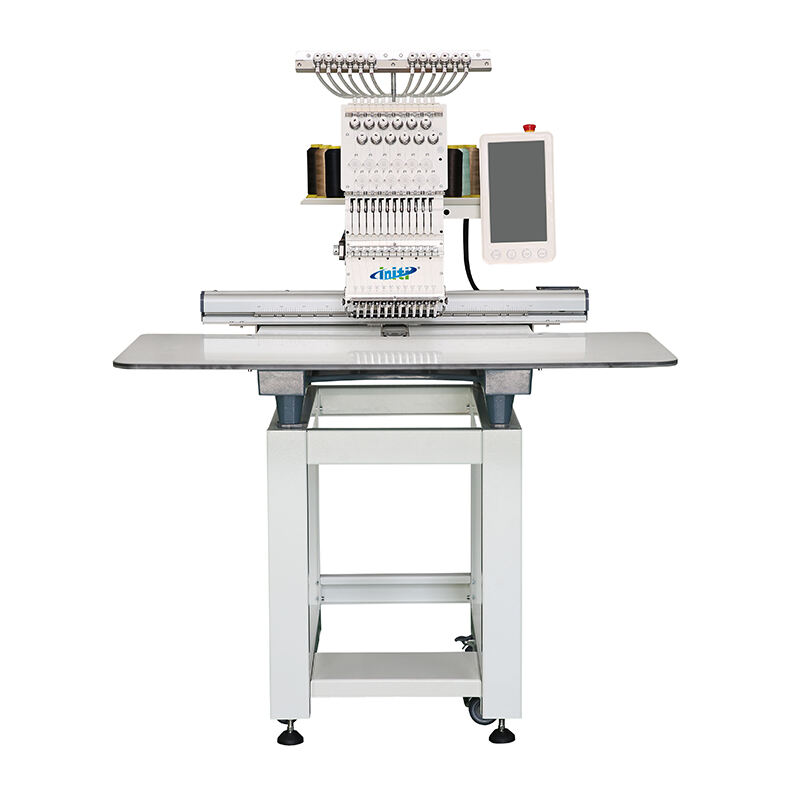
Revolutionary Production Capabilities of Modern Embroidery Systems
Advanced Threading Technology and Time Reduction
The threading mechanisms in automatic multi-needle embroidery machines represent a quantum leap from conventional systems. Modern units feature pneumatic threading systems that eliminate the tedious manual process of changing threads between colors. This automation reduces thread change time from several minutes to mere seconds, directly translating to increased production throughput. The precision-engineered thread guides ensure consistent tension across all needles, preventing common issues like thread breaks or uneven stitching that plague manual systems.
Advanced sensors continuously monitor thread levels and automatically alert operators when supplies run low. This predictive maintenance approach prevents costly production interruptions and ensures smooth workflow continuity. The automated thread trimming function eliminates the need for manual cutting, reducing labor costs while improving finished product consistency. These technological improvements collectively contribute to the significant efficiency gains that manufacturers experience when upgrading their equipment.
Multi-Color Design Execution Without Manual Intervention
Complex embroidery designs requiring multiple color changes become effortless with automatic multi-needle embroidery machines. The computerized control systems seamlessly transition between colors according to programmed design specifications, eliminating human error and reducing production time. This capability is particularly valuable for intricate corporate logos, detailed artwork, and multi-colored promotional items that would be time-intensive on traditional machines.
The automated color sequence management ensures perfect registration between design elements, maintaining consistent quality across large production runs. Operators can load multiple designs into the machine's memory, allowing for batch production of different items without constant supervision. This flexibility enables manufacturers to accept diverse orders while maintaining efficient production schedules and meeting tight delivery deadlines.
Productivity Metrics and Performance Optimization
Quantifiable Efficiency Improvements
Industry data consistently demonstrates that automatic multi-needle embroidery machines deliver measurable productivity increases ranging from 25% to 40% compared to traditional single-needle systems. These improvements stem from reduced setup times, faster stitching speeds, and minimized operator intervention requirements. The parallel processing capabilities allow multiple design elements to be completed simultaneously, dramatically reducing overall production cycles.
Real-world case studies from embroidery businesses show average production increases of 30% within the first six months of implementing automated systems. This improvement directly impacts profitability through higher order fulfillment rates and reduced labor costs per unit produced. The consistent quality output also reduces waste and rework, further enhancing overall productivity metrics.
Operational Cost Analysis and Return on Investment
The financial benefits of automatic multi-needle embroidery machines extend beyond immediate productivity gains. Energy efficiency improvements reduce operational costs, while the precision engineering minimizes material waste. The automated systems require fewer skilled operators per machine, allowing businesses to reallocate human resources to other value-added activities such as design development or customer service.
Maintenance costs decrease significantly due to the robust construction and self-monitoring capabilities of modern automatic systems. The reduced wear and tear from automated operations extends component lifecycles, lowering replacement part expenses. Most manufacturers report achieving complete return on investment within 18 to 24 months, making these machines attractive capital investments for growing embroidery businesses.
Technical Specifications and Performance Features
Precision Engineering and Quality Control Systems
The engineering excellence in automatic multi-needle embroidery machines ensures consistent stitch quality across extended production runs. High-precision stepper motors provide exact needle positioning, while advanced tension control systems maintain optimal thread handling throughout the embroidery process. The computerized monitoring systems track every aspect of operation, from stitch count to thread consumption, providing valuable data for production planning and quality assurance.
Built-in quality control features include automatic thread break detection, fabric positioning sensors, and real-time stitch monitoring. These systems immediately halt production when irregularities are detected, preventing defective products and material waste. The diagnostic capabilities enable predictive maintenance scheduling, reducing unexpected downtime and maintaining consistent production schedules.
Versatility and Adaptability for Diverse Applications
Modern automatic multi-needle embroidery machines accommodate a vast range of materials and applications, from delicate silk fabrics to heavy canvas and leather goods. The programmable hoop systems handle various fabric sizes and thicknesses, while adjustable presser feet ensure optimal fabric handling regardless of material characteristics. This versatility enables businesses to diversify their product offerings without investing in multiple specialized machines.
The software compatibility with industry-standard design formats allows seamless integration with existing design workflows. Advanced embroidery software provides sophisticated editing capabilities, enabling operators to optimize designs for maximum efficiency while maintaining quality standards. The machine's ability to store hundreds of designs in memory facilitates quick changeovers between different production runs.
Implementation Strategies and Best Practices
Workflow Integration and Staff Training
Successful implementation of automatic multi-needle embroidery machines requires strategic workflow planning and comprehensive staff training programs. The transition from manual to automated systems involves reorganizing production processes to maximize the efficiency benefits of automation. Proper training ensures operators understand the advanced features and can troubleshoot minor issues without disrupting production schedules.
Establishing standardized operating procedures helps maintain consistency across shifts and operators. Regular maintenance schedules and quality checkpoints ensure the machines continue delivering optimal performance throughout their operational life. Investment in training pays dividends through reduced operator errors, improved machine utilization, and extended equipment longevity.
Production Planning and Capacity Management
Effective utilization of automatic multi-needle embroidery machines requires sophisticated production planning that accounts for design complexity, material requirements, and delivery schedules. The increased capacity enables businesses to accept larger orders while maintaining quality standards. Strategic scheduling of similar designs can further optimize efficiency by reducing setup and changeover times.
Inventory management becomes critical with increased production capacity, requiring adequate thread, backing materials, and finished goods storage. The ability to produce items faster than traditional methods may necessitate adjustments to supply chain logistics and customer communication processes. Proper planning ensures the full productivity potential of automatic systems is realized while maintaining customer satisfaction.
Market Trends and Future Developments
Industry Adoption Patterns and Competitive Advantages
The embroidery industry is experiencing widespread adoption of automatic multi-needle embroidery machines as businesses recognize the competitive advantages these systems provide. Early adopters have established market leadership positions through superior production capabilities and cost-effective pricing strategies. The technology gap between automated and manual operations continues widening, making automation essential for long-term competitiveness.
Customer expectations for faster turnaround times and consistent quality are driving demand for automated production capabilities. Businesses utilizing automatic systems can offer shorter lead times while maintaining premium quality standards, creating significant competitive differentiation. The ability to handle complex, multi-color designs efficiently opens new market opportunities in corporate apparel, promotional products, and custom embroidery services.
Technological Evolution and Smart Manufacturing Integration
Emerging technologies are further enhancing the capabilities of automatic multi-needle embroidery machines through IoT connectivity, artificial intelligence, and predictive analytics. Smart manufacturing integration enables remote monitoring, automated quality control, and predictive maintenance scheduling. These advanced features promise even greater efficiency improvements and reduced operational costs in the coming years.
The integration of automatic multi-needle embroidery machines with enterprise resource planning systems enables comprehensive production tracking and cost analysis. Real-time data collection facilitates informed decision-making regarding capacity utilization, pricing strategies, and investment planning. The evolution toward fully connected manufacturing environments positions businesses for continued growth and operational excellence.
FAQ
What makes automatic multi-needle embroidery machines more efficient than traditional systems
Automatic multi-needle embroidery machines deliver superior efficiency through automated thread changing, reduced setup times, and simultaneous multi-color processing capabilities. The elimination of manual intervention for color changes alone can reduce production time by 30-40%. Advanced sensors and computerized controls minimize errors and production interruptions, while higher stitching speeds and precision engineering ensure consistent quality output across large production runs.
How quickly can businesses expect to see return on investment from these machines
Most embroidery businesses achieve full return on investment within 18 to 24 months when implementing automatic multi-needle embroidery machines. The combination of increased production capacity, reduced labor costs, improved quality consistency, and lower material waste contributes to rapid payback periods. Businesses with high-volume operations or premium pricing strategies often realize returns even faster, sometimes within 12 to 15 months.
What training requirements exist for operating automatic embroidery systems
Operating automatic multi-needle embroidery machines typically requires 2-3 weeks of comprehensive training covering machine operation, software utilization, maintenance procedures, and troubleshooting techniques. While the automation reduces the skill level needed for routine operations, operators must understand the computerized controls and quality monitoring systems. Most manufacturers provide extensive training programs and ongoing technical support to ensure optimal machine utilization and performance.
Can these machines handle different fabric types and thicknesses effectively
Modern automatic multi-needle embroidery machines are engineered to accommodate diverse fabric types ranging from lightweight silk to heavy canvas and leather materials. Adjustable presser feet, programmable tension controls, and variable speed settings allow optimal handling of different material characteristics. The computerized systems can store specific settings for various fabric types, enabling quick changeovers between different materials while maintaining consistent quality standards across all applications.
Table of Contents
- Revolutionary Production Capabilities of Modern Embroidery Systems
- Productivity Metrics and Performance Optimization
- Technical Specifications and Performance Features
- Implementation Strategies and Best Practices
- Market Trends and Future Developments
-
FAQ
- What makes automatic multi-needle embroidery machines more efficient than traditional systems
- How quickly can businesses expect to see return on investment from these machines
- What training requirements exist for operating automatic embroidery systems
- Can these machines handle different fabric types and thicknesses effectively