

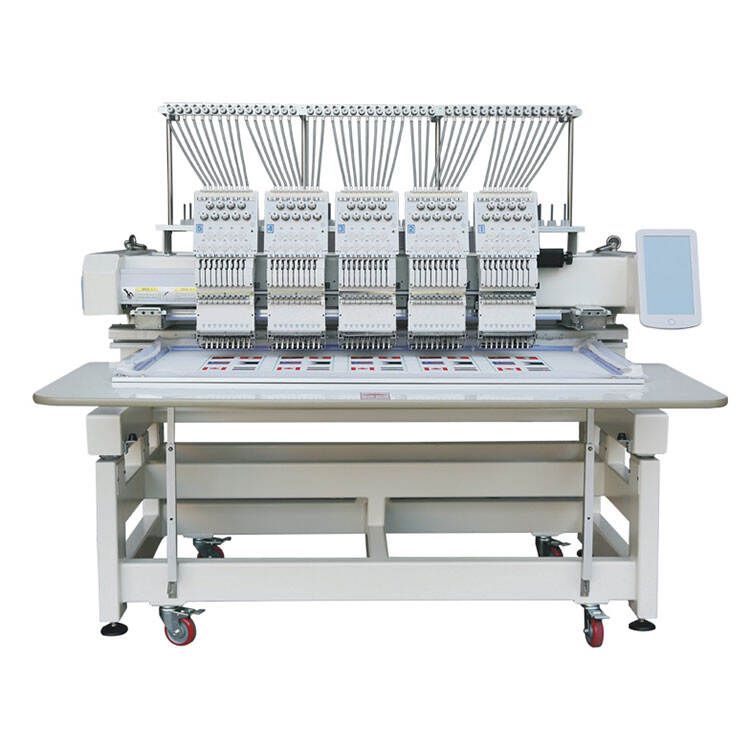
The textile and apparel industry continues to evolve rapidly, with businesses seeking efficient solutions to meet growing demand for customized headwear. Wholesale cap embroidery machines have emerged as essential equipment for manufacturers, distributors, and custom decoration businesses looking to scale their production capabilities. These specialized machines offer significant advantages over traditional single-head units, enabling businesses to produce large quantities of embroidered caps while maintaining consistent quality and reducing per-unit costs.
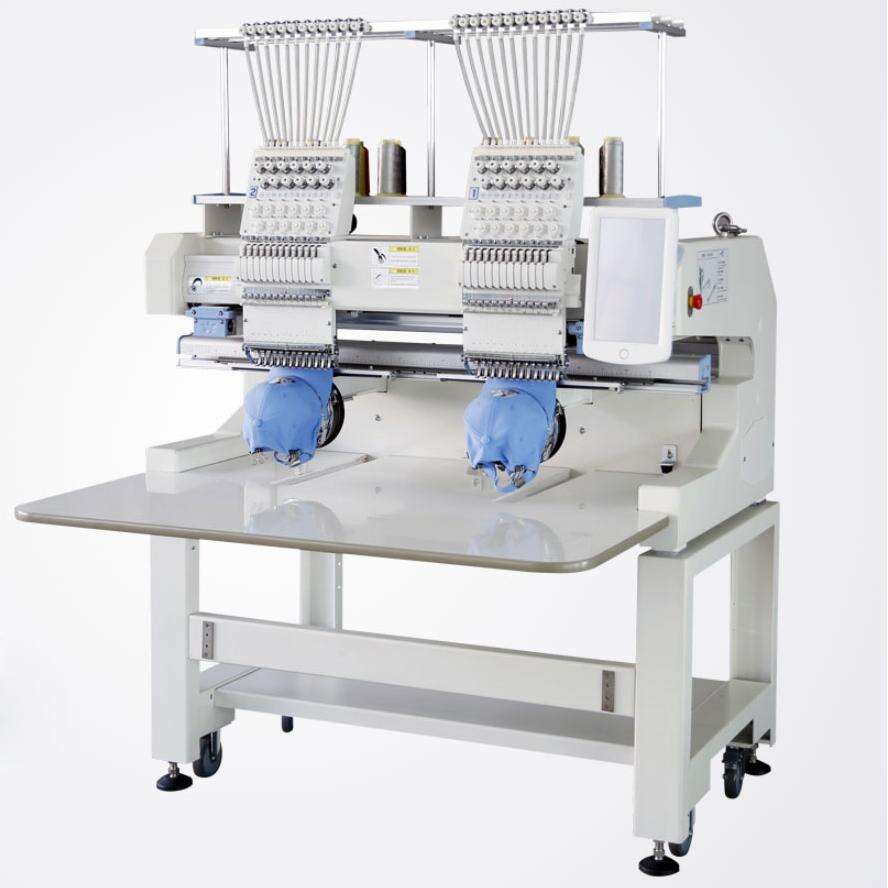
Understanding Multi-Head Embroidery Technology
Advanced Needle Configuration Systems
Modern wholesale cap embroidery machines typically feature multiple needle configurations ranging from 6 to 15 needles per head. This configuration allows for complex multi-color designs without requiring frequent thread changes or operator intervention. The advanced needle systems incorporate automatic thread cutting mechanisms and tension control features that ensure consistent stitch quality across all production runs. Professional-grade machines also include thread break detection sensors that automatically stop production when issues occur, preventing material waste and maintaining embroidery integrity.
The precision engineering of these needle systems enables wholesale cap embroidery machines to handle various thread types including polyester, rayon, metallic, and specialty threads. Each needle operates independently, allowing for simultaneous color changes and reducing overall production time. The automated lubrication systems in commercial-grade machines ensure smooth operation during extended production runs, minimizing maintenance requirements and maximizing uptime for high-volume operations.
Integrated Control and Monitoring Features
Contemporary wholesale cap embroidery machines incorporate sophisticated computerized control systems that manage every aspect of the embroidery process. These systems feature touchscreen interfaces that allow operators to load designs, adjust parameters, and monitor production progress in real-time. The integrated software typically supports multiple file formats including DST, EMB, and PES, ensuring compatibility with various design software platforms commonly used in the embroidery industry.
Remote monitoring capabilities enable production managers to track machine performance, production counts, and maintenance schedules from mobile devices or computer terminals. These features are particularly valuable for businesses operating multiple wholesale cap embroidery machines across different locations, as they provide centralized oversight and enable proactive maintenance scheduling to prevent unexpected downtime.
Production Efficiency and Scalability Advantages
Multi-Head Production Benefits
The primary advantage of wholesale cap embroidery machines lies in their ability to produce multiple identical items simultaneously. A typical 6-head machine can complete six caps in the time required for a single-head machine to finish one cap, representing a 600% increase in production capacity. This multiplication factor becomes even more significant with larger multi-head configurations, making it possible to fulfill substantial orders within tight deadlines while maintaining competitive pricing structures.
The simultaneous production capability of wholesale cap embroidery machines also reduces labor costs per unit, as a single operator can manage multiple embroidery heads simultaneously. This efficiency translates into improved profit margins and the ability to accept larger orders that would be impractical with single-head equipment. The consistent quality across all heads ensures uniformity in finished products, which is crucial for maintaining brand standards in commercial applications.
Automated Threading and Setup Processes
Modern wholesale cap embroidery machines feature automated threading systems that significantly reduce setup time between jobs. These systems can automatically thread multiple needles simultaneously, eliminating the time-consuming manual threading process that traditionally slowed production transitions. The automated setup capabilities extend to hoop positioning and design alignment, ensuring precise placement consistency across all production heads.
The quick-change hoop systems incorporated in professional wholesale cap embroidery machines allow for rapid job transitions without compromising positioning accuracy. These systems often include magnetic or pneumatic clamping mechanisms that secure caps firmly while allowing easy removal and replacement. The reduced setup time enables businesses to accept smaller batch orders profitably, expanding their market opportunities beyond large-volume contracts.
Cost Analysis and Return on Investment
Initial Investment Considerations
While wholesale cap embroidery machines represent a significant initial investment compared to single-head alternatives, the cost analysis must consider long-term production capacity and revenue generation potential. A comprehensive financial evaluation should include factors such as increased production capacity, reduced labor costs per unit, and the ability to accept larger orders that command higher profit margins. The durability and reliability of commercial-grade machines also contribute to lower total cost of ownership over the equipment's operational lifespan.
Financing options specifically designed for industrial embroidery equipment can help businesses manage the initial investment while immediately benefiting from increased production capacity. Many suppliers offer lease-to-own arrangements or equipment financing programs that align payment schedules with revenue generation from the wholesale cap embroidery machines. These financing structures enable businesses to scale their operations without depleting working capital reserves needed for inventory and operational expenses.
Operational Cost Efficiency
The operational efficiency of wholesale cap embroidery machines extends beyond raw production speed to include reduced utility consumption per unit produced. Modern machines incorporate energy-efficient servo motors and LED lighting systems that minimize electricity usage while maintaining peak performance levels. The automated features reduce operator fatigue and training requirements, leading to more consistent production quality and reduced error rates that can result in material waste.
Maintenance costs for wholesale cap embroidery machines are typically lower per unit produced compared to operating multiple single-head machines. The consolidated mechanical systems require fewer service calls and parts replacements, while predictive maintenance features help prevent costly breakdowns. The reduced floor space requirements for multi-head machines also contribute to lower facility costs, making them attractive for businesses operating in expensive commercial real estate markets.
Quality Control and Consistency Standards
Precision Stitching Mechanisms
Professional wholesale cap embroidery machines incorporate advanced stitching mechanisms that ensure consistent tension and stitch formation across all production heads. The computerized tension control systems automatically adjust to different thread types and fabric characteristics, maintaining optimal stitch quality without manual intervention. These systems monitor thread tension in real-time and make micro-adjustments to compensate for variations in materials or environmental conditions.
The precision positioning systems in wholesale cap embroidery machines utilize high-resolution encoders and servo motors to achieve accuracy levels measured in hundredths of millimeters. This precision is essential for producing professional-quality embroidery that meets commercial standards, particularly when working with intricate designs or small text elements. The consistent positioning accuracy across all heads ensures that every cap in a production run meets identical quality standards.
Built-in Quality Assurance Features
Contemporary wholesale cap embroidery machines include comprehensive quality assurance features that monitor various aspects of the embroidery process. Thread break sensors immediately detect and alert operators to any threading issues, while stitch count monitors track progress and identify potential problems before they affect finished products. These monitoring systems help maintain consistent quality standards while reducing the need for constant operator supervision.
The integrated camera systems available on premium wholesale cap embroidery machines provide real-time visual monitoring of the embroidery process. These systems can detect alignment issues, thread breaks, or other anomalies that might compromise quality, automatically stopping production when problems are identified. The recorded images also serve as quality documentation for customer verification and internal process improvement initiatives.
Market Applications and Industry Segments
Commercial Embroidery Services
Commercial embroidery services represent the largest market segment for wholesale cap embroidery machines, as these businesses require high-volume production capabilities to serve diverse clientele efficiently. Contract embroiderers use these machines to fulfill orders for corporate clients, sports teams, promotional product distributors, and retail brands. The ability to handle multiple orders simultaneously while maintaining quick turnaround times is essential for success in this competitive market segment.
The versatility of modern wholesale cap embroidery machines enables commercial services to work with various cap styles, materials, and design complexities without requiring specialized equipment for each application. This flexibility allows businesses to accept diverse orders and expand their service offerings, ultimately increasing revenue opportunities and market competitiveness.
In-House Production Operations
Many businesses across different industries have established in-house embroidery operations using wholesale cap embroidery machines to maintain control over their branded merchandise production. Retail chains, sports organizations, educational institutions, and corporate entities benefit from having dedicated embroidery capabilities that ensure consistent branding and eliminate dependence on external suppliers. The ability to produce caps on-demand also enables these organizations to respond quickly to promotional opportunities or special events.
In-house operations using wholesale cap embroidery machines often achieve better cost control and faster delivery times compared to outsourcing embroidery work. The direct control over production scheduling allows organizations to coordinate cap production with marketing campaigns, product launches, or seasonal events more effectively than would be possible when relying on external embroidery services.
Technology Integration and Future Developments
Digital Design Integration
The integration of digital design systems with wholesale cap embroidery machines has revolutionized the workflow from concept to finished product. Modern machines can receive designs directly from computer networks, eliminating the need for physical design media and reducing the potential for errors during file transfers. The compatibility with cloud-based design systems enables remote design submission and approval processes, streamlining operations for businesses serving geographically distributed clients.
Advanced wholesale cap embroidery machines now feature built-in design editing capabilities that allow operators to make minor adjustments without returning to separate design software. These on-machine editing features include scaling, positioning, and color modification tools that enable quick customization for specific orders. The integration of barcode scanning systems also automates order tracking and ensures accurate design selection for each production run.
Connectivity and Industry 4.0 Features
The latest wholesale cap embroidery machines incorporate Internet of Things connectivity that enables integration with enterprise resource planning systems and production management software. These connections facilitate automatic order processing, inventory management, and production scheduling that optimizes machine utilization and reduces administrative overhead. The data collection capabilities provide insights into production efficiency, machine performance, and quality trends that support continuous improvement initiatives.
Predictive maintenance systems in advanced wholesale cap embroidery machines analyze operational data to identify potential issues before they cause production disruptions. These systems monitor factors such as motor temperature, vibration patterns, and usage cycles to recommend maintenance actions that prevent unexpected breakdowns. The integration with mobile notification systems ensures that maintenance teams receive timely alerts regardless of their location.
FAQ
What is the typical production capacity difference between single-head and multi-head cap embroidery machines
Multi-head wholesale cap embroidery machines typically increase production capacity by a factor equal to the number of heads. A 6-head machine produces six caps simultaneously in the time a single-head machine completes one cap, representing a 500% increase in hourly output. However, the actual capacity improvement also depends on design complexity, thread changes, and setup time between jobs. For high-volume production runs with standardized designs, the efficiency gains can be even greater due to economies of scale in setup and operation.
How much floor space do multi-head embroidery machines require compared to multiple single-head units
Wholesale cap embroidery machines typically require significantly less floor space than the equivalent number of single-head machines. A 6-head machine usually occupies approximately 40-50% of the space needed for six separate single-head units, while also reducing the complexity of utility connections and ventilation requirements. The consolidated design also simplifies facility layout and improves workflow efficiency by centralizing the embroidery operations in a smaller area, making better use of available production space.
What maintenance requirements are associated with multi-head embroidery machines
Maintenance requirements for wholesale cap embroidery machines include daily cleaning and lubrication, weekly tension adjustments, and periodic replacement of consumable parts such as needles and bobbins. While these machines have more complex mechanical systems than single-head units, the maintenance per production unit is typically lower due to the higher output capacity. Most manufacturers recommend professional service every 6-12 months depending on usage levels, and many machines include automated maintenance reminders and diagnostic systems to help optimize service schedules.
Can wholesale cap embroidery machines handle different cap styles and materials effectively
Modern wholesale cap embroidery machines are designed with adjustable hooping systems and needle configurations that accommodate various cap styles including fitted caps, snapbacks, beanies, and visors. The machines can effectively embroider on different materials such as cotton, polyester, wool, and blended fabrics by adjusting tension settings and stitch parameters. Many machines include preset programs for common cap types and materials, while also allowing custom parameter settings for specialized applications or unique cap designs that require specific handling approaches.
Table of Contents
- Understanding Multi-Head Embroidery Technology
- Production Efficiency and Scalability Advantages
- Cost Analysis and Return on Investment
- Quality Control and Consistency Standards
- Market Applications and Industry Segments
- Technology Integration and Future Developments
-
FAQ
- What is the typical production capacity difference between single-head and multi-head cap embroidery machines
- How much floor space do multi-head embroidery machines require compared to multiple single-head units
- What maintenance requirements are associated with multi-head embroidery machines
- Can wholesale cap embroidery machines handle different cap styles and materials effectively