

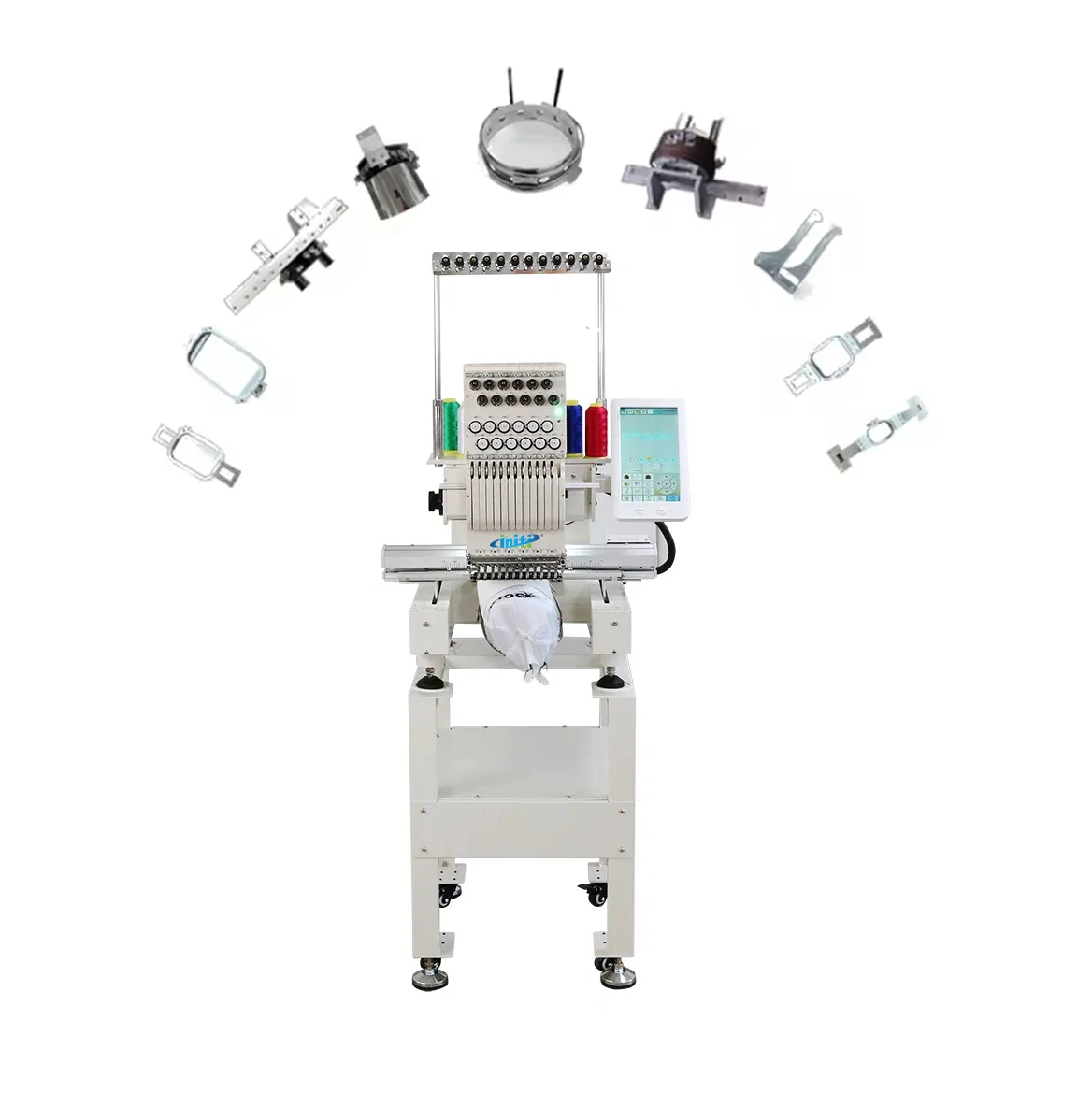
In the competitive landscape of textile manufacturing and custom embroidery, the foundation of exceptional output lies in the reliability and precision of your equipment. A precision embroidery machine serves as the cornerstone of successful operations, where consistent quality and accuracy determine business success. Manufacturing facilities worldwide recognize that investing in stable, high-performance machinery translates directly into reduced downtime, improved product quality, and enhanced customer satisfaction. The modern embroidery industry demands equipment that can deliver intricate designs with repeatable accuracy, making machine stability not just a preference but an absolute necessity for sustainable operations.
Engineering Excellence in Machine Stability
Mechanical Foundation Systems
The mechanical foundation of a precision embroidery machine determines its ability to maintain consistent performance under continuous operation. Advanced engineering incorporates reinforced frame construction, precision-machined components, and vibration-dampening systems that work together to eliminate unwanted movement during embroidery cycles. These foundational elements ensure that each stitch placement remains accurate, regardless of operational speed or design complexity. Modern manufacturers utilize high-grade steel alloys and precision casting techniques to create machine frames that resist flexing and maintain dimensional stability over extended periods.
Temperature management plays a crucial role in maintaining mechanical stability throughout production runs. Sophisticated cooling systems and thermal expansion compensation mechanisms prevent dimensional changes that could affect stitch quality. The integration of these systems ensures that a precision embroidery machine maintains its calibrated settings even during intensive production schedules. Manufacturing facilities report significant improvements in output consistency when utilizing equipment designed with comprehensive thermal management capabilities.
Control System Integration
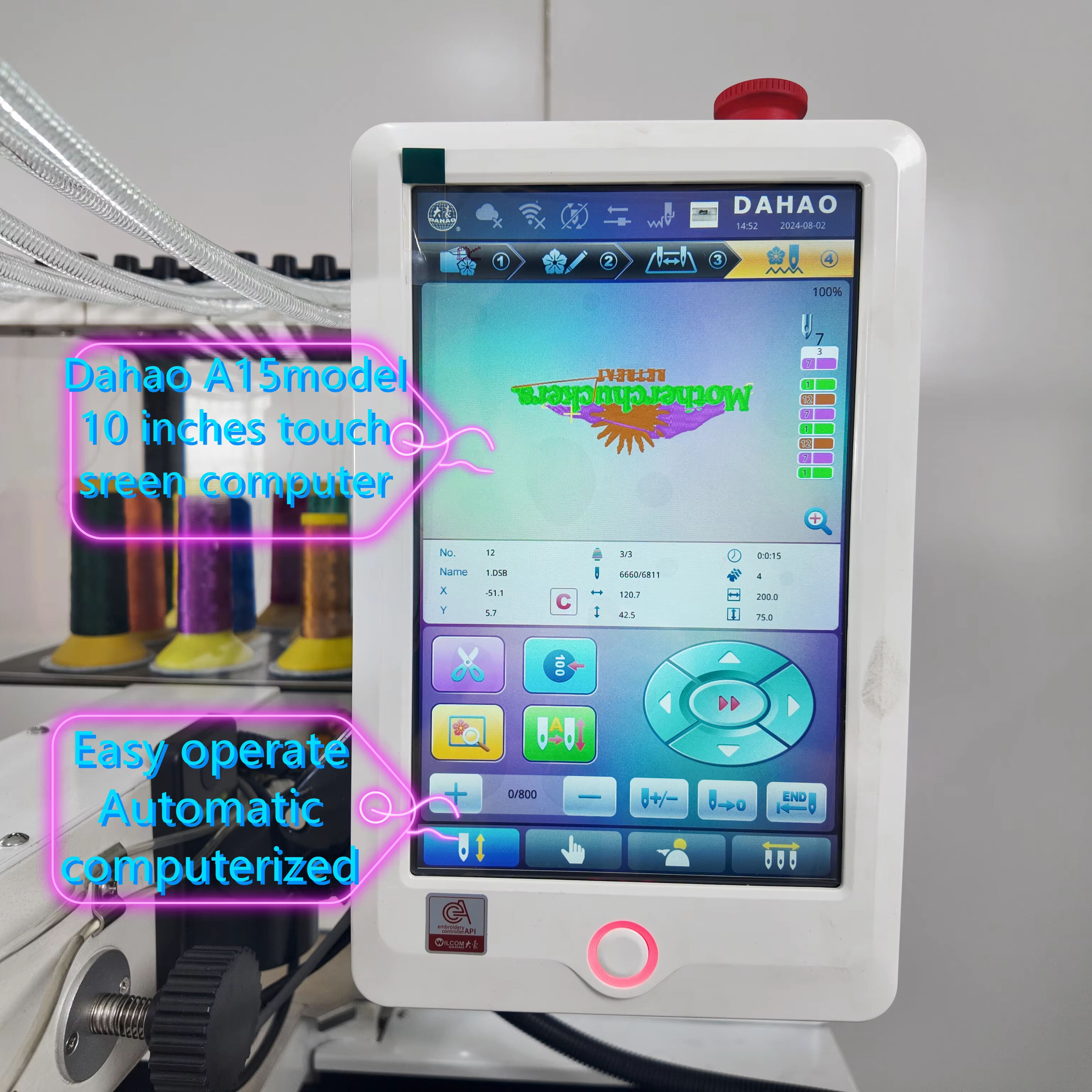
Digital control systems represent the technological backbone of modern embroidery equipment, providing the computational power necessary for precise needle positioning and timing control. Advanced servo motor technology combined with high-resolution encoders enables positioning accuracy measured in fractions of millimeters. These control systems continuously monitor machine performance parameters, making real-time adjustments to maintain optimal operation. The sophistication of these systems allows operators to achieve consistent results across diverse fabric types and design specifications.
Feedback mechanisms integrated into control systems provide continuous monitoring of machine performance, identifying potential issues before they impact production quality. Predictive maintenance algorithms analyze operational data to schedule maintenance activities, preventing unexpected downtime. This proactive approach to machine management ensures that precision embroidery machine performance remains stable throughout its operational lifecycle. Manufacturing facilities implementing these technologies report significant reductions in maintenance costs and production interruptions.
Quality Assurance Through Precision Engineering
Stitch Formation Accuracy
The ability to form consistent, high-quality stitches represents the fundamental measure of embroidery machine performance. Precision needle positioning systems ensure that each penetration occurs at the exact programmed location, creating uniform stitch patterns across entire production runs. Thread tension control mechanisms maintain consistent thread delivery, preventing variations that could compromise stitch appearance or durability. These systems work together to ensure that every embroidered piece meets stringent quality standards.
Advanced needle bar technologies minimize vibration and deflection during high-speed operation, maintaining stitch accuracy even at maximum production rates. The precision embroidery machine incorporates sophisticated damping systems that eliminate unwanted oscillations while preserving the rapid needle movements necessary for efficient production. This engineering approach ensures that quality remains consistent regardless of operational speed, allowing manufacturers to optimize production efficiency without compromising output standards.
Design Reproduction Fidelity
Accurate design reproduction requires precise coordination between multiple machine systems, including positioning mechanisms, thread handling, and needle control. Modern embroidery equipment utilizes advanced interpolation algorithms to translate digital designs into precise machine movements, ensuring faithful reproduction of complex patterns and intricate details. These systems maintain design integrity across varying fabric types and thicknesses, adapting automatically to substrate characteristics.
Color management systems ensure consistent thread selection and changeover, maintaining design accuracy throughout multi-color embroidery processes. Automated thread trimming and tie-off functions eliminate variations that manual operations might introduce, contributing to overall design consistency. The integration of these automated systems in a precision embroidery machine ensures that every reproduced design maintains the intended visual impact and professional appearance.
Operational Efficiency and Productivity Optimization
Production Speed Management
Balancing production speed with quality output requires sophisticated machine design that maintains precision across varying operational parameters. Modern embroidery equipment incorporates adaptive speed control systems that optimize needle movement rates based on design complexity and fabric characteristics. These systems automatically adjust operating parameters to maintain quality standards while maximizing production throughput. The result is consistent output quality regardless of production volume demands.
Acceleration and deceleration profiles programmed into machine control systems ensure smooth transitions between different operational speeds. These profiles prevent sudden movements that could compromise stitch quality or cause thread breakage. A precision embroidery machine equipped with advanced speed management capabilities allows operators to maintain consistent quality while adapting to varying production requirements. This flexibility proves essential in custom embroidery operations where design complexity and production volumes fluctuate significantly.
Maintenance and Reliability Factors
Preventive maintenance programs designed specifically for precision embroidery equipment ensure consistent performance throughout the machine's operational life. Regular calibration procedures maintain accuracy standards, while systematic component replacement prevents wear-related performance degradation. These maintenance protocols preserve the precision characteristics that distinguish professional-grade equipment from basic alternatives. Manufacturers provide detailed maintenance schedules that optimize machine longevity while minimizing operational disruptions.
Diagnostic systems integrated into modern embroidery equipment provide real-time performance monitoring and alert operators to potential issues before they impact production. These systems track key performance indicators, including stitch accuracy, thread tension variations, and mechanical tolerances. Early warning capabilities allow maintenance teams to address issues proactively, preventing costly production delays. The implementation of comprehensive diagnostic systems significantly extends the operational life of precision embroidery machine installations.
Industrial Applications and Market Requirements
Commercial Embroidery Operations
Commercial embroidery facilities require equipment capable of maintaining consistent quality across high-volume production runs. The demands of contract manufacturing necessitate machines that can operate continuously while delivering uniform results across diverse client specifications. A precision embroidery machine designed for commercial applications incorporates robust construction and advanced control systems that ensure reliable performance under intensive operational conditions. These facilities depend on equipment stability to maintain delivery schedules and quality commitments.
Market competitiveness in commercial embroidery depends heavily on the ability to deliver consistent quality while maintaining efficient production rates. Equipment reliability directly impacts profitability through reduced downtime, lower rejection rates, and improved customer satisfaction. Commercial operators report that investing in stable, precision-engineered equipment provides significant returns through improved operational efficiency and reduced maintenance costs. The precision embroidery machine represents a critical investment in maintaining competitive advantage within the commercial marketplace.
Custom Design Manufacturing
Custom embroidery applications demand exceptional precision and reliability to ensure accurate reproduction of unique designs and specialized requirements. These applications often involve complex multi-color patterns, varying fabric substrates, and tight tolerance requirements that challenge machine capabilities. Equipment stability becomes particularly critical when producing limited quantities or prototype samples where setup costs must be minimized. A precision embroidery machine designed for custom applications provides the flexibility and accuracy necessary to meet diverse client specifications.
The ability to maintain consistent quality across varying design specifications distinguishes professional custom embroidery operations from basic service providers. Clients expect faithful reproduction of their designs regardless of complexity or substrate requirements. Advanced machine capabilities enable custom operators to accept challenging projects while maintaining quality standards and delivery commitments. This capability expansion directly translates into increased revenue opportunities and enhanced market positioning.
Technology Integration and Future Developments
Digital Control Advancements
Contemporary embroidery technology incorporates sophisticated digital control systems that provide unprecedented precision and operational flexibility. These systems utilize advanced algorithms to optimize needle positioning, thread tension, and operational timing based on real-time feedback from multiple sensors. The integration of artificial intelligence capabilities enables predictive adjustments that maintain quality standards while adapting to varying operational conditions. A precision embroidery machine equipped with these technologies represents the current state-of-the-art in manufacturing capability.
Cloud connectivity and remote monitoring capabilities enable manufacturers to optimize machine performance through data analysis and predictive maintenance scheduling. These systems collect operational data that provides insights into performance trends and optimization opportunities. Remote diagnostic capabilities allow technical support teams to identify and resolve issues without on-site visits, minimizing production disruptions. The precision embroidery machine benefits significantly from these technological advances through improved uptime and reduced maintenance costs.
Automation and Integration Capabilities
Modern manufacturing environments increasingly demand equipment that integrates seamlessly with automated production systems and quality control processes. Advanced embroidery equipment incorporates interfaces that enable communication with upstream and downstream processes, creating integrated production workflows. These capabilities reduce manual handling requirements while maintaining precision standards throughout the manufacturing process. Automated material handling and quality inspection systems work together to create comprehensive production solutions.
Industry 4.0 principles drive the development of smart manufacturing systems that optimize production efficiency through real-time data analysis and automated decision-making. Embroidery equipment designed with these principles incorporates sensors and communication systems that enable integration with enterprise manufacturing systems. The precision embroidery machine becomes a key component in these integrated systems, providing the accuracy and reliability necessary for automated production environments. These developments represent the future direction of manufacturing technology and competitive advantage.
FAQ
What factors determine the stability of an embroidery machine
Machine stability depends on several critical factors including frame construction quality, vibration control systems, precision of mechanical components, and effectiveness of control algorithms. A precision embroidery machine incorporates reinforced frame designs, advanced damping systems, and high-precision components that work together to minimize unwanted movement during operation. Temperature management, proper foundation installation, and regular maintenance also contribute significantly to overall machine stability and consistent performance.
How does machine precision affect production quality and efficiency
Precision directly impacts both output quality and operational efficiency by ensuring consistent stitch placement, reducing rejection rates, and minimizing rework requirements. A precision embroidery machine maintains tight tolerances that result in uniform product quality across entire production runs. This consistency reduces material waste, eliminates time spent on quality corrections, and enables higher production speeds without compromising output standards. The cumulative effect is improved profitability through reduced costs and increased throughput.
What maintenance requirements ensure continued precision performance
Maintaining precision performance requires regular calibration procedures, systematic component inspection, and adherence to manufacturer-specified maintenance schedules. Critical maintenance activities include needle bar alignment, thread tension calibration, timing adjustments, and lubrication of precision components. A precision embroidery machine benefits from proactive maintenance approaches that address wear patterns before they impact performance. Diagnostic systems help identify maintenance needs early, preventing costly production disruptions and maintaining quality standards.
How do modern control systems enhance machine reliability
Advanced control systems enhance reliability through continuous monitoring, predictive maintenance capabilities, and real-time performance optimization. These systems automatically adjust operational parameters to maintain quality standards while identifying potential issues before they cause production problems. A precision embroidery machine equipped with modern control technology provides consistent performance across varying operational conditions while reducing maintenance requirements and extending equipment life. The integration of smart technologies creates self-optimizing systems that maintain peak performance with minimal operator intervention.