

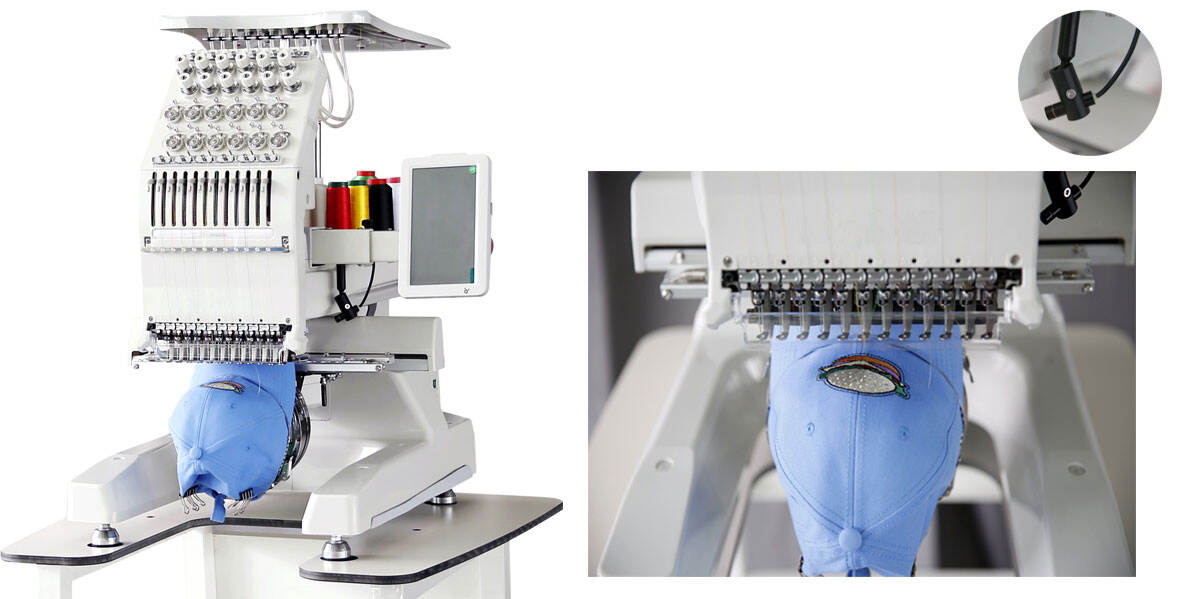
Achieving consistent stitch quality remains one of the most critical challenges in modern embroidery sewing operations. Professional embroiderers understand that stability forms the foundation of every successful embroidery project, directly impacting production efficiency, thread consumption, and final product quality. When embroidery sewing equipment lacks proper stability, operators experience inconsistent tension, irregular stitch formation, and frequent thread breaks that compromise both productivity and profitability. The relationship between machine stability and stitch consistency has become increasingly important as demand for high-quality embroidered products continues to grow across industries.
Understanding Machine Stability in Embroidery Operations
Mechanical Foundation Requirements
Machine stability in embroidery sewing begins with robust mechanical foundations that minimize vibration and maintain precise positioning throughout operation. Heavy-duty frames constructed from cast iron or steel provide the necessary mass to absorb operational forces generated during high-speed stitching. These foundations must support not only the embroidery head mechanisms but also maintain dimensional accuracy under varying load conditions. Professional embroidery sewing systems incorporate advanced dampening systems that isolate mechanical vibrations from the work surface, ensuring consistent needle penetration and thread placement.
The relationship between frame rigidity and stitch quality becomes particularly evident during multi-head operations where synchronized movement across multiple embroidery stations demands exceptional stability. Manufacturing facilities investing in properly engineered foundations typically observe significant improvements in thread break reduction and overall production consistency. Modern embroidery sewing equipment manufacturers have responded to these requirements by developing integrated stability systems that combine mechanical dampening with electronic monitoring capabilities.
Electronic Control System Integration
Advanced electronic control systems play a crucial role in maintaining stability during embroidery sewing operations by continuously monitoring and adjusting operational parameters. These systems integrate servo motor controls, tension regulators, and position feedback mechanisms to ensure consistent performance across varying fabric types and design complexities. Sophisticated algorithms analyze real-time operational data to detect potential stability issues before they impact stitch quality, enabling proactive adjustments that maintain production consistency.
Digital control interfaces provide operators with comprehensive stability monitoring capabilities, including vibration analysis, tension variance tracking, and positional accuracy measurements. This integration between mechanical stability and electronic control creates a synergistic effect that enhances overall embroidery sewing performance while reducing operator intervention requirements. Professional facilities utilizing these integrated systems report substantial improvements in both productivity metrics and quality consistency across extended production runs.
Fabric Handling and Stabilization Techniques
Hooping Methods for Optimal Stability
Proper hooping techniques form the cornerstone of stable embroidery sewing operations, directly influencing stitch formation and fabric integrity throughout the embroidery process. Professional embroiderers employ systematic hooping procedures that ensure uniform fabric tension while minimizing distortion during stitching cycles. The selection of appropriate hoop sizes, tension settings, and positioning methods varies significantly based on fabric characteristics, design complexity, and production volume requirements.
Pneumatic hooping systems have revolutionized stability control in commercial embroidery sewing applications by providing consistent pressure distribution and rapid setup capabilities. These automated systems eliminate human variability in hooping tension while enabling quick changeovers between different fabric types and thicknesses. Advanced facilities integrate pressure monitoring systems that verify optimal hooping conditions before initiating embroidery cycles, reducing setup-related quality issues and improving overall production efficiency.
Stabilizer Selection and Application
Strategic stabilizer selection directly impacts the stability achieved during embroidery sewing operations, with different stabilizer types providing specific benefits for various fabric and design combinations. Cut-away stabilizers offer permanent support for stretch fabrics and high-density designs, while tear-away options provide temporary stability for stable woven materials. Water-soluble stabilizers enable clean removal from delicate fabrics without compromising the embroidered design integrity.
Professional embroidery sewing operations maintain comprehensive stabilizer inventories to address diverse production requirements while optimizing stability for each specific application. The layering of multiple stabilizer types creates customized stability solutions that accommodate challenging fabric behaviors and complex design requirements. Understanding the interaction between stabilizer properties and fabric characteristics enables operators to achieve consistent results across diverse production scenarios while maintaining cost efficiency.
Design Considerations for Stable Embroidery Execution
Stitch Density and Direction Planning
Optimal stitch density planning significantly influences the stability requirements and execution success of embroidery sewing projects. Excessive stitch density can overwhelm fabric stability systems, leading to puckering, registration issues, and thread breaks, while insufficient density may result in inadequate coverage and poor design definition. Professional digitizers calculate optimal density values based on fabric weight, stretch characteristics, and stabilizer properties to ensure stable execution throughout the embroidery process.
Stitch direction planning requires careful consideration of fabric grain, stretch properties, and design geometry to maintain stability during embroidery sewing operations. Strategic direction changes can minimize fabric distortion while maintaining design integrity, particularly important for challenging materials like knits and stretch fabrics. Advanced digitizing software incorporates stability analysis tools that simulate embroidery execution, enabling designers to optimize stitch parameters before production begins.
Registration and Alignment Systems
Precise registration systems ensure accurate design placement and maintain stability throughout multi-color embroidery sewing sequences. Modern embroidery equipment incorporates laser alignment systems, camera-based positioning, and automatic registration marks to eliminate human error in setup procedures. These systems become particularly critical for complex designs requiring precise color changes and overlay accuracy across multiple embroidery heads.
Automated registration capabilities reduce setup time while improving consistency across production runs, directly contributing to overall stability and quality outcomes. Professional embroidery sewing facilities implement comprehensive registration protocols that include verification procedures and quality checkpoints throughout the production process. The integration of digital registration systems with stability monitoring creates a comprehensive quality control environment that maintains consistent results regardless of operator experience levels.
Maintenance Protocols for Sustained Stability
Preventive Maintenance Scheduling
Systematic preventive maintenance programs ensure sustained stability in embroidery sewing operations by addressing mechanical wear and calibration drift before they impact production quality. Regular lubrication schedules, tension system adjustments, and mechanical component inspections prevent gradual degradation that compromises stability over time. Professional maintenance protocols include detailed checklists that address all stability-critical components while documenting performance trends for predictive maintenance planning.
Advanced embroidery sewing systems incorporate diagnostic capabilities that monitor stability parameters and alert operators to potential maintenance requirements. These systems track vibration levels, temperature variations, and operational tolerances to identify components approaching service limits. Facilities implementing comprehensive maintenance programs typically achieve significantly higher stability consistency while reducing unexpected downtime and quality issues that impact production schedules.
Calibration and Adjustment Procedures
Regular calibration procedures maintain the precision required for stable embroidery sewing operations by ensuring all mechanical and electronic systems operate within specified tolerances. Tension system calibration affects thread delivery consistency, while timing adjustments ensure proper needle and hook coordination throughout varying operational speeds. Professional calibration protocols address both mechanical adjustments and electronic parameter verification to maintain comprehensive system stability.
Modern embroidery equipment provides automated calibration capabilities that simplify maintenance procedures while improving calibration accuracy and repeatability. These systems can perform self-diagnostic routines that verify stability parameters and guide operators through necessary adjustments. The integration of automatic calibration with stability monitoring creates a self-maintaining environment that sustains optimal performance with minimal operator intervention, particularly valuable in high-volume production environments.
Production Environment Optimization
Climate Control and Environmental Factors
Environmental stability significantly influences embroidery sewing consistency through temperature and humidity effects on both fabrics and thread materials. Professional production facilities maintain controlled climate conditions that minimize dimensional changes in natural fibers while ensuring consistent thread tension and performance characteristics. Temperature fluctuations can cause thread expansion and contraction that affects tension consistency, while humidity variations impact fabric stability and handling characteristics.
Advanced production facilities incorporate environmental monitoring systems that track temperature, humidity, and air circulation parameters throughout the embroidery sewing area. These systems provide alerts when conditions deviate from optimal ranges, enabling proactive adjustments that maintain stability conditions. The investment in proper environmental control typically yields significant returns through reduced thread breaks, improved stitch consistency, and enhanced overall production efficiency.
Workflow Organization and Setup Procedures
Systematic workflow organization contributes to stability by minimizing setup variations and ensuring consistent procedures across all embroidery sewing operations. Standardized setup procedures eliminate human variability while ensuring optimal stability conditions for each production run. Professional facilities develop detailed standard operating procedures that address hooping techniques, stabilizer application, and machine setup parameters for different fabric and design combinations.
Efficient workflow design reduces handling time and minimizes opportunities for stability disruption during production transitions. Advanced facilities implement digital work instructions and quality checkpoints that guide operators through optimal setup procedures while maintaining documentation for continuous improvement initiatives. The integration of workflow optimization with stability monitoring creates a comprehensive production environment that consistently delivers high-quality embroidery results.
Technology Advances in Stability Control
Sensor Integration and Monitoring Systems
Modern embroidery sewing equipment incorporates sophisticated sensor networks that continuously monitor stability parameters and provide real-time feedback to control systems. Vibration sensors detect mechanical instabilities before they affect stitch quality, while tension monitors ensure consistent thread delivery throughout embroidery cycles. These integrated sensing systems enable predictive stability control that anticipates and prevents quality issues before they occur in production.
Advanced monitoring systems collect stability data that enables continuous improvement initiatives and predictive maintenance planning. Machine learning algorithms analyze historical stability patterns to optimize operational parameters automatically while identifying potential improvement opportunities. Professional facilities utilizing these advanced monitoring capabilities report significant improvements in both stability consistency and overall production efficiency across diverse embroidery applications.
Artificial Intelligence and Adaptive Control
Artificial intelligence applications in embroidery sewing focus on adaptive stability control that automatically adjusts operational parameters based on real-time conditions and historical performance data. These systems learn from successful embroidery cycles to optimize stability settings for different fabric types, design complexities, and environmental conditions. AI-powered control systems can predict stability requirements and make proactive adjustments that maintain consistent quality throughout production runs.
Machine learning algorithms analyze vast amounts of stability data to identify patterns and correlations that human operators might overlook, enabling optimization strategies that continuously improve embroidery sewing performance. These systems can automatically adjust tension settings, speed parameters, and timing relationships to maintain optimal stability under varying conditions. The integration of AI-powered stability control represents the next evolution in embroidery technology, promising unprecedented consistency and quality in commercial production environments.
FAQ
What causes instability during embroidery sewing operations
Instability in embroidery sewing typically results from inadequate machine foundations, improper hooping techniques, insufficient stabilizer selection, or mechanical wear in critical components. Vibration from high-speed operation can also cause instability if the machine frame lacks sufficient mass or proper dampening systems. Environmental factors such as temperature fluctuations and humidity changes can affect thread and fabric properties, contributing to stability issues during embroidery cycles.
How does machine stability affect thread consumption
Poor machine stability increases thread consumption through frequent breaks, tension irregularities, and the need for rework cycles. Unstable conditions cause thread breaks that require restarting embroidery segments, wasting both time and thread materials. Additionally, stability issues often require reduced operational speeds to maintain quality, extending production time and increasing overall thread usage per completed design.
What maintenance practices improve embroidery stability
Regular lubrication of mechanical components, calibration of tension systems, and inspection of wear-prone parts maintain optimal stability in embroidery sewing operations. Cleaning procedures that remove thread residue and lint buildup prevent mechanical binding that compromises stability. Additionally, periodic alignment checks and timing adjustments ensure all system components work together harmoniously to maintain consistent stability throughout production cycles.
How can operators identify stability problems early
Early stability problem identification involves monitoring stitch quality consistency, thread break frequency, and unusual machine vibrations or noises during embroidery sewing operations. Changes in thread tension requirements or increased frequency of design registration issues often indicate developing stability problems. Modern machines provide diagnostic information and alert systems that help operators identify stability issues before they significantly impact production quality and efficiency.